
Welcome to HealthPedia24, where we decode wellness to help you achieve your healthiest skin. If you have ever experienced sudden sensitivity, persistent redness, or applied a product that made your face sting when it never did before, you have likely encountered a compromised hero: your skin barrier.
The skin barrier is the single most vital component of skin health. It is the gatekeeper that keeps moisture locked in and external threats—like pollution, bacteria, and irritants—locked out. Understanding how this delicate structure works is the first and most crucial step toward building a truly effective and resilient skincare routine.
In this deep-dive guide, we will answer the core question: What is the skin barrier? We will explore its structure, teach you how to spot a damaged skin barrier, examine the common causes of its breakdown, and provide a definitive roadmap for effective repair and recovery.
What Is the Skin Barrier?
To understand skin health, we must look at the skin’s anatomy. Your skin is made up of several layers, but the outermost layer is called the stratum corneum. This is what dermatologists and skincare experts refer to as the skin barrier.
Think of your skin structure as a “brick and mortar” wall:
- The Bricks: These are your skin cells (corneocytes).
- The Mortar: This is the lipid matrix holding the cells together, composed of ceramides, cholesterol, and fatty acids.
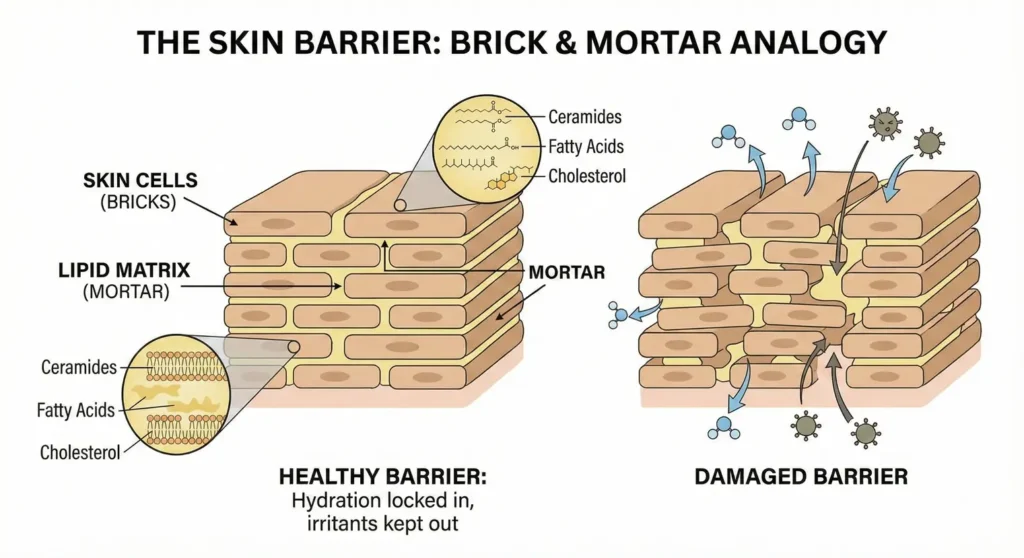
When this “wall” is intact, it serves two primary functions:
- Protection: It keeps external irritants, bacteria, and pollution out.
- Retention: It locks essential moisture (water) inside so your skin stays hydrated.
When the “mortar” degrades or the “bricks” are damaged, the skin barrier becomes permeable. This allows moisture to escape (leading to Transepidermal Water Loss or TEWL) and irritants to enter, causing inflammation.
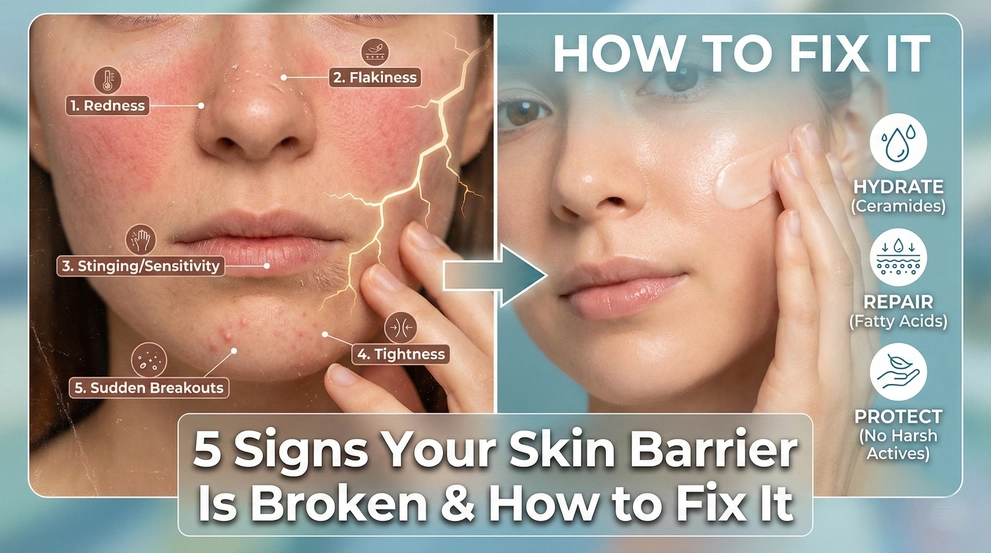
5 Alarming Signs of a Damaged Skin Barrier
If your skin barrier is compromised, it will send clear distress signals. It is vital to recognize these symptoms immediately so you can halt exfoliation and start the repair process.
- Persistent Dryness and Flakiness: This is the most common symptom. Even after moisturizing, your skin feels dry because the barrier cannot hold the water in (high TEWL).
- Unexplained Redness and Sensitivity: Your skin looks permanently flushed or turns red instantly after washing. This is a sign that irritants are penetrating too deep.
- Stinging or Burning Sensation: Products that never bothered you before (like a basic toner or cleanser) suddenly cause a stinging, painful sensation upon application.
- New or Worsening Acne: A damaged skin barrier allows bacteria to penetrate more easily, leading to small, inflamed pimples and persistent breakouts that won’t clear up.
- Inflammatory Conditions: Existing issues like eczema, rosacea, or psoriasis may suddenly flare up or become much harder to control.
Why Your Skin Barrier Broke Down: 5 Common Causes
Understanding the root cause of the damage is the first step toward effective long-term repair. The damage to your skin barrier is usually a result of lifestyle, environment, or poor product choices.
1. Over-Exfoliation and Aggressive Actives
This is the number one cause of damage. Enthusiastic use of chemical exfoliants (AHAs like Glycolic Acid, BHAs like Salicylic Acid) or harsh physical scrubs strips the essential lipids (mortar) away faster than your skin can replenish them.
- The Problem: Trying to “fix” dryness or acne by scrubbing or using high-concentration acids daily severely compromises the lipid layer of your skin barrier.
2. Harsh Cleansing and Water Temperature
Using foaming cleansers containing harsh surfactants (like Sodium Lauryl Sulfate or SLS) or washing your face with very hot water actively dissolves the fatty acid layer of your skin barrier.
- The Solution: Hot water strips natural oils, making it easier for essential barrier components to be washed away. Lukewarm water is always best.
3. Environmental Stressors
Your skin barrier is your shield against the outside world. When it faces extreme conditions, it struggles to maintain integrity.
- Cold, Dry Air: Low humidity rapidly increases TEWL, causing severe dryness and cracks in the barrier.
- Pollution and UV Rays: These elements generate free radicals, which attack the lipids, weakening the structural integrity of the skin barrier.
4. High pH Products
Your skin naturally has an acidic pH (around 5.5). Using highly alkaline or high pH products (like some traditional bar soaps) disrupts this natural acidity, which is essential for enzymes that maintain the lipid structure.
- The Result: A raised pH level weakens the tight junctions of the skin barrier, making it more permeable to bacteria and irritants.
5. Aging
As we age, our body’s natural production of ceramides and lipids decreases. This naturally weakens the skin barrier, making mature skin more prone to dryness and irritation.
Broken Skin Barrier vs. Sensitive Skin: What’s the Difference?
A common question users on Healthpedia ask is whether they have a damaged barrier or just naturally sensitive skin.
- Sensitive Skin: This is a skin type. You are likely born with it. Your skin is genetically predisposed to react to certain triggers.
- Broken/Damaged Skin Barrier: This is a skin condition. It is temporary and caused by external factors.
However, a broken skin barrier can make normal skin act like sensitive skin. Once you repair the barrier, the sensitivity often subsides.
The 4 Techniques: How to Repair Your Skin Barrier (The Fix)
Repairing a damaged skin barrier is less about adding new products and more about subtracting the things causing harm. This is a crucial phase that requires patience and simplicity.
1. Simplify Your Routine (The “Less is More” Rule)
Stop all potential irritants immediately. This means pausing:
- Chemical exfoliants (AHAs, BHAs).
- Retinoids/Retinols (Vitamin A).
- High concentrations of Vitamin C.
- Strong physical scrubs.
Your temporary routine should be reduced to just three basic steps: Cleanser, Barrier Repair Moisturizer, and SPF (in the morning).
Also Visit:
Perfect Skincare Order – Clear Skin Guide2. The “Hero” Repair Ingredients
Look for a moisturizer that contains ingredients which mimic the natural structure of your skin. Your repair cream must contain a blend of:
| Ingredient | Role in Barrier Repair |
| Ceramides | These make up 50% of your skin’s natural barrier. They are the “glue” that reseals the cracks. |
| Fatty Acids | Essential for the structural integrity of the cell walls. |
| Cholesterol | Works with ceramides to maintain elasticity and water retention. |
| Niacinamide | Boosts your skin’s own production of ceramides and calms the inflammation caused by a damaged skin barrier. |
| Panthenol (Vit B5) | A humectant that soothes and heals the skin barrier rapidly. |
3. The “Sandwich” Method
To maximize hydration while healing:
- Hydrate: Apply a watery toner or essence on damp skin (look for Hyaluronic Acid or Glycerin).
- Seal: Apply your thick, ceramide-rich moisturizer.
- Protect (Pm Only): For severe damage, apply a thin layer of an occlusive ointment (like Vaseline or a balm) over dry patches to physically lock everything in. This is called “Slugging.”
4. Sun Protection is Non-Negotiable
UV rays are the enemy of healing skin. You must wear a broad-spectrum sunscreen (SPF 30 or higher) every day. Mineral sunscreens (containing Zinc Oxide or Titanium Dioxide) are often better tolerated by damaged skin than chemical filters.
Skin Barrier Repair Timeline: How Long Does it Take?
A very common question is regarding the duration of healing (often searched as “skin barrier repair hone me kitna time lagta hai”). The timeline depends on the severity of the damage, but here is a general guide:
- 2 Days to 1 Week: If the damage is minor (just some tightness), stopping actives and hydrating will fix it quickly. The stinging should stop within 3 days.
- 2 to 4 Weeks: For moderate damage (redness, flaking, rough texture), it takes about one full skin cycle (28 days) to fully restore the lipid matrix.
- 3+ Months: If you have chronically damaged your barrier for years (severe over-exfoliation), it may take several months for the skin’s sensitivity to fully reset.
Patience is key. Do not rush back into using acids the moment your skin feels soft again. Give it an extra week of safety.
Conclusion: Prevention is Better than Cure
Your skin barrier is the unsung hero of your appearance. When it is healthy, your skin looks glowing, smooth, and youthful. When it is damaged, no amount of expensive makeup or serums can hide the texture and redness. By understanding what the skin barrier is and treating it with gentle respect, you can prevent the cycle of damage and repair. Remember, less is often more. A simple routine that prioritizes barrier health will always outperform a complex routine that strips your skin.
Sources : American Academy of Dermatology ( Basic Skincare Rules and Barrier Repair Basics), Mayo Clinic ( Symptoms Explanation ),National Institutes of Health ( Scientific Facts like Ceramides makes 50% of your skin’s natural barrier ).
Important Disclaimer
HealthPedia24 is not responsible for any individual adverse reactions or consequences resulting from the use of the information provided herein. The content provided by HealthPedia24 is for general informational and educational purposes only and is NOT a substitute for professional medical advice, diagnosis, or treatment.
Always consult a qualified dermatologist or healthcare professional with any questions regarding a medical condition or before starting any new skincare regimen. We recommend performing a patch test before using any new product or ingredient discussed on this site.
Frequently Asked Questions (FAQs)
How do I know if my skin barrier is damaged?
You can identify a damaged barrier by specific symptoms: your skin will feel tight, look red or inflamed, and feel rough to the touch. The most obvious sign is a stinging or burning sensation when applying products that are usually gentle, such as your moisturizer or sunscreen.
What are the main symptoms of a broken skin barrier?
The most common symptoms include persistent redness, itchiness, flaking, dehydration (tightness), and increased sensitivity. You may also experience sudden breakouts or acne because the barrier can no longer keep bacteria out effectively.
Why did my skin barrier break down?
The primary causes are over-exfoliation (using scrubs or acids too often), using harsh cleansers with a high pH, sun damage, and environmental stressors like pollution or cold wind. Washing your face with hot water can also strip the natural lipids that protect your skin.
How long does it take for the skin barrier to repair?
For minor damage, the skin barrier can repair itself in about 2 weeks with a gentle routine. However, for moderate to severe damage, it typically takes 28 to 45 days, which is the length of a full skin cell turnover cycle. Consistency is key during this period.
Can a damaged skin barrier heal itself?
Yes, the skin has natural healing abilities. However, it can only heal if you stop the damage. You must stop using active ingredients (like Retinol, Vitamin C, and AHAs/BHAs) and focus solely on hydration and protection (Sunscreen) to allow the repair process to happen.