
Hello, and welcome back to Healthpedia24!
You’ve likely invested time and money in finding the perfect routine—the right cleansers, the strongest serums, the richest moisturizers. But what if we told you that the key to a healthy, resilient, and clear complexion isn’t found in a specific ingredient, but in a single number? That number is your pH balance.
The pH balance of your skin is perhaps the most fundamental concept in skincare. When it’s off, your skin becomes prone to dryness, acne, redness, and sensitivity. Understanding this number allows you to choose the right products and avoid the common mistakes that sabotage your routine.
In this comprehensive guide, we will break down the science of the skin’s pH, explain its protective role, detail how your products affect this delicate ecosystem, and give you an actionable plan to maintain the perfect pH balance for lasting skin health.
What Exactly is Your Skin’s pH Balance?
The term pH stands for “potential of Hydrogen.” It is a scale used to specify how acidic or alkaline a substance is. The scale ranges from 0 to 14:
- 0: Purely Acidic (e.g., Battery Acid)
- 7: Neutral (e.g., Pure Water)
- 14: Purely Alkaline or Basic (e.g., Lye or Bleach)
The Ideal Skin pH Range
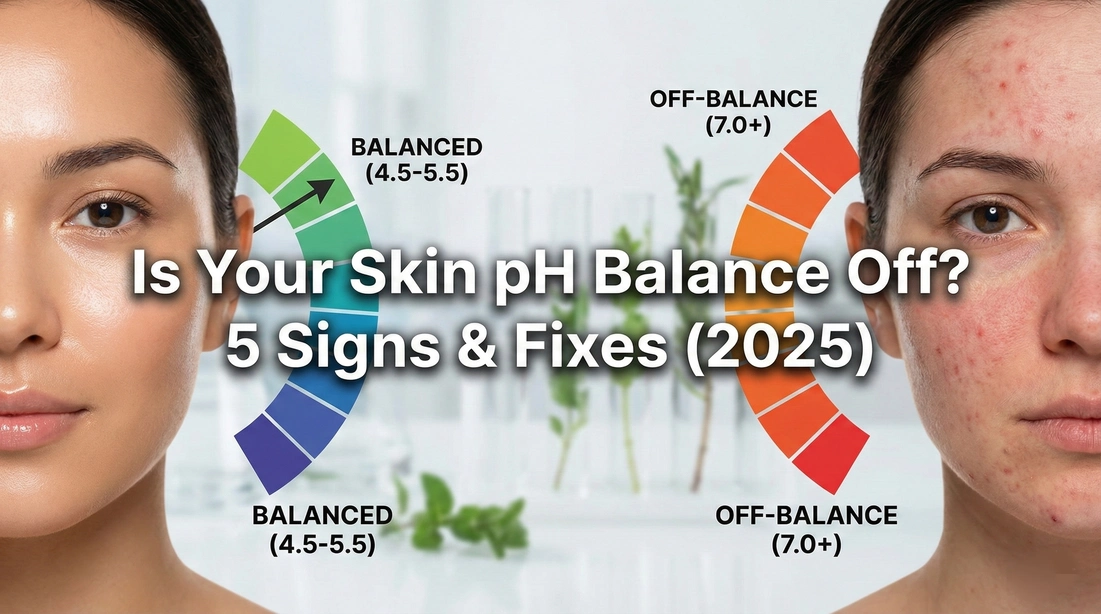
Contrary to popular belief that the skin should be neutral (pH 7), healthy human skin is actually naturally acidic. Scientific consensus places the optimal pH balance for the skin between 4.7 and 5.75.
This mildly acidic state is essential for biological processes, including shedding dead skin cells and fighting bacteria.
Why Is the pH Balance of Your Skin So Important?
Maintaining the correct pH balance isn’t just about chemistry; it’s about biology. When your skin stays within that optimal 4.7–5.5 range, it functions like a well-oiled machine. Here is why it is critical:
1. The ”Acid Mantle” Protection
- Pathogen Defense: Its acidity creates an inhospitable environment for harmful bacteria, fungi, and viruses (such as P. acnes, which causes breakouts).
- Enzyme Activation: Acidic conditions are necessary for enzymes that promote the natural shedding of dead skin cells (desquamation). If the pH balance is too high, these enzymes stop working, leading to dull, rough, and congested skin.
- Barrier Integrity: The Acid Mantle is fundamental to the structure and repair mechanisms of the skin barrier, ensuring water stays in and irritants stay out.
2. Moisture Retention
A healthy pH balance ensures your skin barrier remains intact. This stimulates the production of epidermal lipids (the fats that keep skin soft). If the pH rises too high (becomes alkaline), these lipids break down, leading to moisture loss and dehydration.
3. Healthy Aging
Studies show that skin with an acidic pH looks healthier and younger. Alkaline skin is more prone to sun damage and fine lines because the enzymes responsible for breaking down collagen are more active in alkaline environments.
The Critical Link Between pH Imbalance and Acne
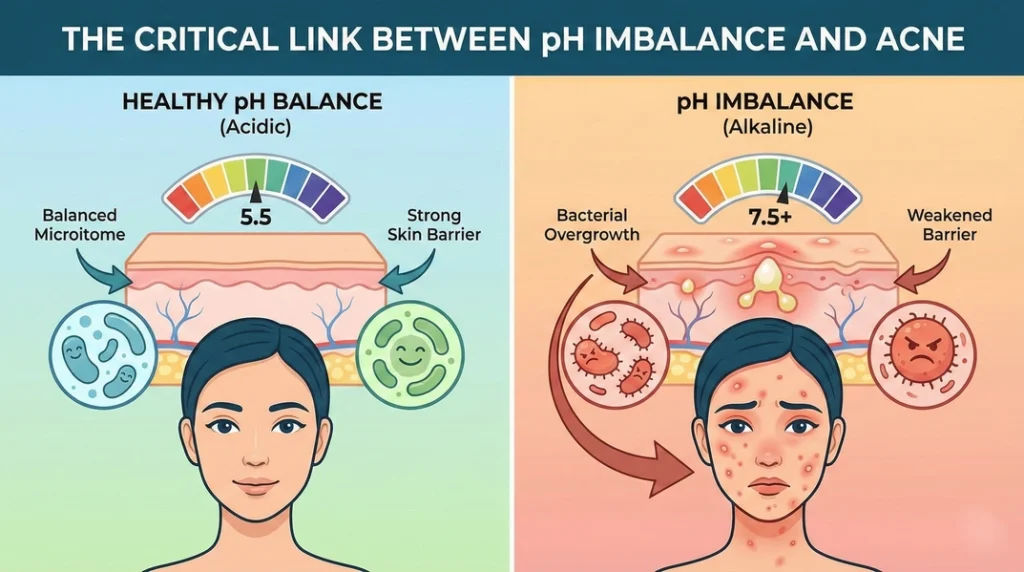
When the skin’s pH balance shifts above its normal acidic range (i.e., becoming more alkaline/neutral, around pH 7 or higher), the entire ecosystem collapses, creating the perfect storm for breakouts.
1. Bacteria Growth and Overpopulation
The primary acne-causing bacteria, Cutibacterium acnes (C. acnes), thrives in a neutral or slightly alkaline environment.
- When your skin’s pH balance is acidic (4.7–5.5), the growth of C. acnes is naturally inhibited.
- When a harsh cleanser raises the pH to 7 or 8, you give these bacteria the ideal conditions to multiply rapidly and colonize pores, leading directly to inflammatory acne.
2. Barrier Breakdown and Inflammation
A slightly acidic pH is essential for maintaining the lipid (mortar) structure of the skin barrier.
- When the pH balance becomes alkaline, the enzymes necessary for creating and strengthening the crucial barrier lipids (like ceramides) stop functioning correctly.
- This leads to a weakened, compromised barrier. A weak barrier cannot hold moisture, resulting in dehydration, and allows irritants and bacteria to penetrate deeply, causing chronic inflammation and persistent breakouts.
This means that products that disrupt the pH balance of your skin aren’t just irritating; they are dismantling your skin’s natural protective mechanism against acne.
How Skincare Products Disrupt Your Skin’s pH Balance
Every product you apply, from your tap water to your moisturizer, has its own pH level, and if that level is too high (alkaline), it can severely damage your skin’s natural pH balance.
1. The Alkaline Shock of Traditional Soaps
Traditional bar soaps are often highly alkaline, with a pH ranging from 8 to 11. When you use one of these products:
- Lipid Damage: The high pH dissolves the protective sebum and essential lipids in the Acid Mantle.
- Time: It can take the skin anywhere from 30 minutes to up to 8 hours to naturally restore its pH balance after exposure to an alkaline product.
- Vulnerability: During this recovery period, the skin is highly susceptible to bacterial growth (acne) and inflammation.
2. High pH Cleansers and Toners
Many foaming cleansers rely on harsh surfactants (like SLS) that have a high pH to create a strong lather. Using these twice daily creates chronic disruption:
- Toners: While many modern toners are acidic, traditional toners often contained alcohol and high pH levels to give a “squeaky clean” feel, leading to long-term pH balance issues and skin barrier breakdown.
3. Tap Water and Hardness
Even your tap water can impact your pH balance. Hard water contains high levels of alkaline minerals like calcium and magnesium. These minerals can leave an alkaline residue on the skin, contributing to dryness and eczema flare-ups.
4. Exfoliants (AHAs and BHAs)
Chemical exfoliants like Glycolic Acid or Salicylic Acid need to be acidic (pH 3.0–4.0) to work. While they are effective, using them too often can push your skin too far down the acidic scale, damaging the barrier.
Testing Your Products (An Actionable Step)
You don’t have to guess if your favorite cleanser is hurting your skin. You can easily test its pH balance at home:
- Gather Supplies: Purchase pH test strips (available online or at pharmacies).
- Test the Product: Mix a small amount of your product (soap, cleanser, or moisturizer) with a drop of distilled water.
- Check the Strip: Dip the strip into the solution and wait for the color change.
- Analyze: If the strip shows a color corresponding to a pH of 7 or higher, your product is likely too alkaline for daily use on acne-prone skin.
5 Clear Signs Your Skin’s pH Balance is Off
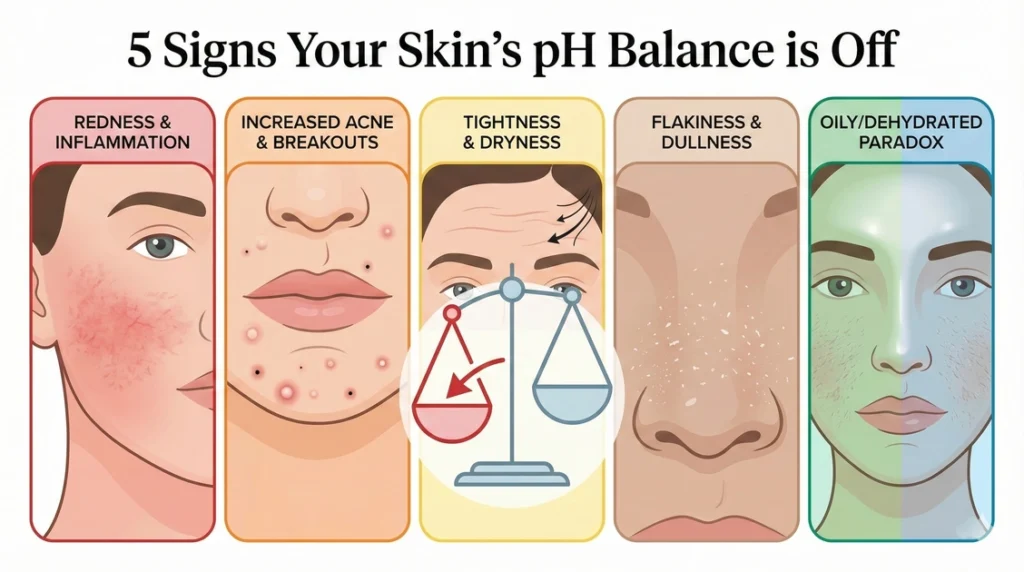
When the pH balance deviates from its ideal acidic range, your skin stops functioning correctly, leading to visible distress signals:
- Redness and Inflammation: Irritants penetrate the compromised Acid Mantle easily, leading to chronic inflammation and a perpetually irritated complexion.
- Increased Acne and Breakouts: The alkaline environment suppresses the skin’s natural defenses, allowing P. acnes bacteria to thrive and multiply.
- Tightness and Dryness: Essential lipids are stripped, leading to rapid Transepidermal Water Loss (TEWL).
- Flakiness and Dullness: Cell turnover enzymes are inactive at a high pH, causing dead skin cells to accumulate on the surface.
- Oily/Dehydrated Paradox: Your skin produces excess oil to try and repair the damaged pH balance and barrier, but it still feels tight and dehydrated underneath.
Internal Factors: Does Diet Affect Skin pH?
A common question at Healthpedia is whether eating acidic or alkaline foods changes skin pH. While diet affects your internal body pH slightly, it has a minimal direct effect on your skin’s surface pH compared to topical products. However, a diet rich in antioxidants and healthy fats supports the skin’s ability to produce the oil needed for the acid mantle.
The Expert Plan for Restoring and Maintaining pH Balance
Restoring a healthy pH balance requires mindfulness and product selection based on science, not marketing hype.
1. Choose pH-Appropriate Cleansers (The Golden Rule)
The most important step is choosing a cleanser with a pH balance between 5.0 and 6.0.
- Look For: Creamy, gel, or oil-based formulas labeled “pH Balanced,” “Low pH,” or “Acidic.”
- Avoid: Traditional bar soaps and strong foaming washes that contain harsh sulfates (SLS/SLES).
2. Introduce Acids Strategically
While the Acid Mantle is naturally acidic, applying topical acids can help quickly restore the pH balance after cleansing.
- Toners: Look for toners containing gentle acids (like Lactic Acid or Mandelic Acid) or mild BHA at low concentrations (under 2%) applied sparingly.
- The Goal: These products act as helpers, gently pulling the skin back to its ideal acidic state.
3. Support the Lipid Matrix
A strong pH balance is useless without a strong physical barrier underneath. Use ingredients that repair the stratum corneum lipids which stabilize the Acid Mantle.
- Focus Ingredients: Ceramides, Cholesterol, Hyaluronic Acid, and Niacinamide. Niacinamide, in particular, helps the skin synthesize its own ceramides, strengthening the entire defense system.
4. Be Wary of Water and Environment
- Lukewarm Water: Always wash your face with lukewarm water; hot water severely strips the natural oils responsible for maintaining pH balance.
- Humidify: Use a humidifier, especially in winter or dry climates, to prevent moisture loss that destabilizes the Acid Mantle.
5. Patch Test New Products
Even products labeled “pH Balanced” can contain ingredients that irritate your specific skin chemistry. Always patch test new products on a small area (like behind the ear or on the jawline) for several days before applying them to your entire face.
Conclusion
Understanding the pH balance of your skin is the missing link between a “good” skincare routine and a “great” one. It is not just a marketing buzzword; it is the biological environment your skin needs to survive.
If you are struggling with chronic dryness, acne that won’t go away, or irritation, stop looking for a miracle cream. Instead, look at the pH of your current products. By switching to a gentle, pH-balanced cleanser and respecting your acid mantle, you allow your skin to heal itself.
Treat your skin like the delicate ecosystem it is. Keep it slightly acidic, keep it hydrated, and the glow will follow.
Sources : National Institutes of Health ( pH of Skin ),PubMed ( pH of Bathing Soaps for Skincare ).
Important Disclaimer
The content provided by HealthPedia24 is for general informational and educational purposes only and is NOT a substitute for professional medical advice, diagnosis, or treatment.
Always consult a qualified dermatologist or healthcare professional with any questions regarding a medical condition or before starting any new skincare regimen. We recommend performing a patch test before using any new product or ingredient discussed on this site.
HealthPedia24 is not responsible for any individual adverse reactions or consequences resulting from the use of the information provided herein.
Frequently Asked Questions (FAQs)
What is the ideal pH level for acne-prone skin?
The sweet spot for acne-prone skin is between pH 4.7 and 5.5. In this slightly acidic range, the skin is best equipped to fight off C. acnes bacteria and maintain a strong moisture barrier. If your skin is too alkaline (above pH 6.0), bacteria thrive, and breakouts worsen.
How do I know if my cleanser has a high pH?
The biggest giveaway is the “squeaky clean” feeling. If your face feels tight, dry, or “squeaky” immediately after washing, your cleanser likely has a high pH (alkaline) and has stripped your acid mantle. You can also buy simple litmus paper strips online to test your products at home.
Are natural bar soaps safe for my face?
Generally, no. Even “natural” or handmade bar soaps are made through saponification, a process that naturally results in a high pH (usually 9 or 10). While they are fine for the body, they are often too harsh for the delicate acid mantle of the face. Look for “Syndet” bars or liquid cleansers specifically labeled “pH balanced.”
How long does it take for skin pH to return to normal after washing?
If you use a high-pH soap, it can take your healthy skin 2 to 6 hours to restore its natural acidity. During this “vulnerability window,” your skin is unprotected against bacteria and irritation. Using a pH-balanced cleanser keeps this recovery time to a minimum.
Can a toner fix my skin’s pH balance?
Yes! A pH-balancing toner is a great tool, especially if you have hard water (which is alkaline). Applying a slightly acidic toner immediately after cleansing helps reset the skin’s pH quickly, ensuring your serums and moisturizers work effectively. Look for toners with ingredients like Witch Hazel (alcohol-free) or low concentrations of AHAs.