
Hello, and welcome back to Healthpedia24!
If there is one non-negotiable step in any effective skincare routine, it is the application of sunscreen. This protective measure is far more critical than any serum or moisturizer for preventing signs of aging, reducing hyperpigmentation, and most importantly, protecting against skin cancer.
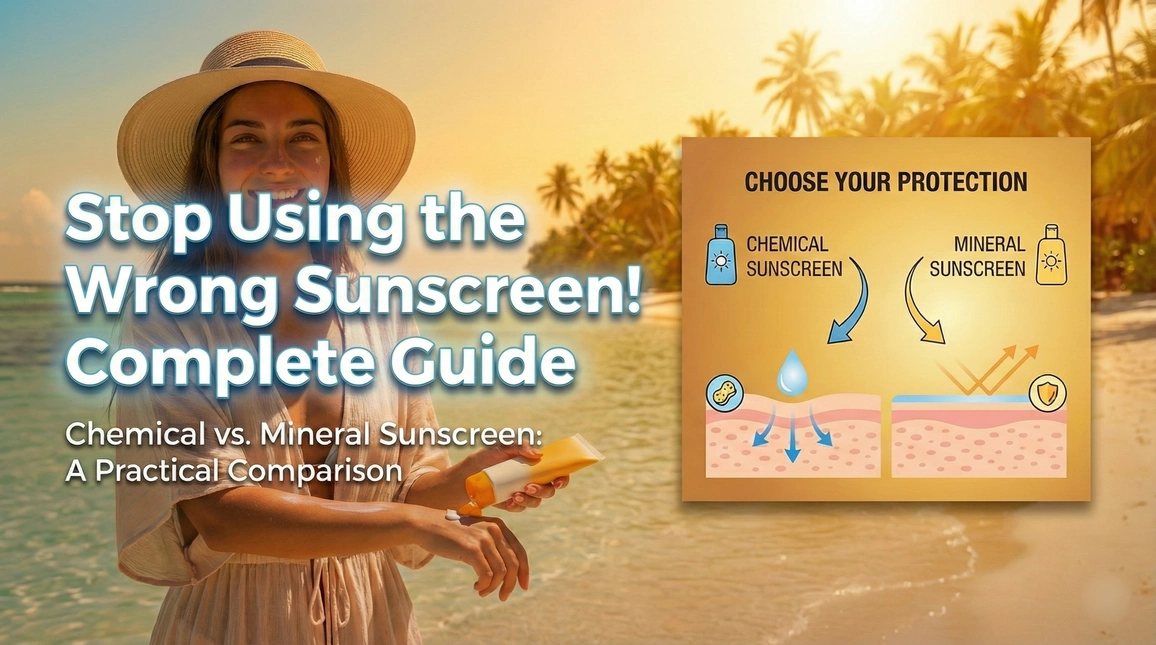
However, standing in the aisle, you’re often faced with a confusing choice: Chemical Sunscreen or Mineral Sunscreen? Each type works completely differently and comes with its own set of pros and cons regarding application, feel, and potential irritation.
In this ultimate guide, we will break down the science of each type of sunscreen, cover the most common application mistakes (like how to apply it with makeup/primer), discuss ingredients you should avoid, and even answer the burning question about flying with your favorite spray formulas. Let’s make choosing and using sunscreen simple!
Understanding the Enemy: UVA and UVB Rays
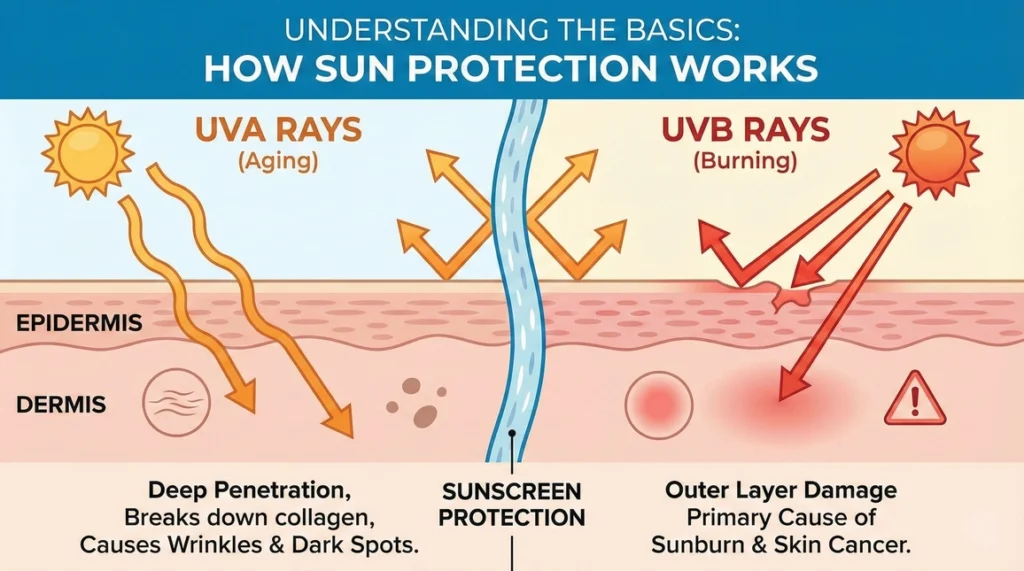
Before we analyze the products, we must understand what we are protecting ourselves against. The sun emits two types of damaging ultraviolet radiation that reach the earth:
- UVA Rays (Aging): These rays penetrate deep into the dermis, destroying collagen and elastin. They are responsible for wrinkles, leathery texture, and sun spots. They can penetrate through glass and clouds.
- UVB Rays (Burning): These rays hit the surface of the skin and are responsible for sunburns and direct DNA damage that can lead to skin cancer.
A “Broad Spectrum” sunscreen is designed to protect you from both. However, the method by which they achieve this protection depends entirely on the debate of chemical vs mineral sunscreen.
What Is Mineral Sunscreen? (Physical Blockers)
Mineral sunscreens, often called physical sunscreens, are the classic form of sun protection. They rely on natural mineral ingredients found in the earth. The two active ingredients approved for this category are Zinc Oxide and Titanium Dioxide.
How It Works
Think of mineral sunscreen as a shield or a mirror. When you apply it, it sits on top of your skin’s surface without being absorbed. When UV rays hit your skin, the minerals reflect and scatter the light away, preventing it from penetrating the skin layers.
The Benefits
- Instant Protection: Since it creates a physical barrier, it works immediately upon application. You do not need to wait 20 minutes before going outside.
- Gentle on Sensitive Skin: Zinc Oxide is naturally soothing and anti-inflammatory, making it the top choice for babies, people with eczema, or those with highly reactive skin.
- Reef Safe: Mineral filters are generally considered safe for marine life and coral reefs.
The Drawbacks
- The White Cast: The biggest complaint in the chemical vs mineral sunscreen debate is that minerals are white powders. They often leave a white, chalky residue on the skin, which can look purple or ashy on darker skin tones.
- Texture: They can feel heavier, thicker, or chalkier compared to chemical formulas.
What Is Chemical Sunscreen? (The Absorbers)
Chemical sunscreens are the most common type found in drugstores. They use organic (carbon-based) compounds to protect the skin. Common active ingredients include Avobenzone, Octinoxate, Oxybenzone, and Octisalate.
How It Works
If mineral sunscreen is a shield, chemical sunscreen is a sponge. It absorbs into the top layer of your skin. When UV rays hit the skin, these chemicals absorb the radiation and undergo a chemical reaction that converts the UV light into heat. This heat is then released from the skin, harmlessly.
The Benefits
- Cosmetically Elegant: These formulas are often lightweight, runny, and completely transparent. They blend easily into the skin with zero white cast, making them a favorite for people with deeper skin tones.
- Water Resistance: Chemical formulations tend to hold up better against sweat and water, making them ideal for sports and swimming.
The Drawbacks
- Wait Time: You must apply them 15-20 minutes before sun exposure to allow the chemical reaction to activate.
- Irritation Risk: Because the UV rays are converted to heat within the skin, it can trigger irritation, redness, or rosacea flare-ups in sensitive individuals.
Chemical vs Mineral Sunscreen: Which One Is Better?
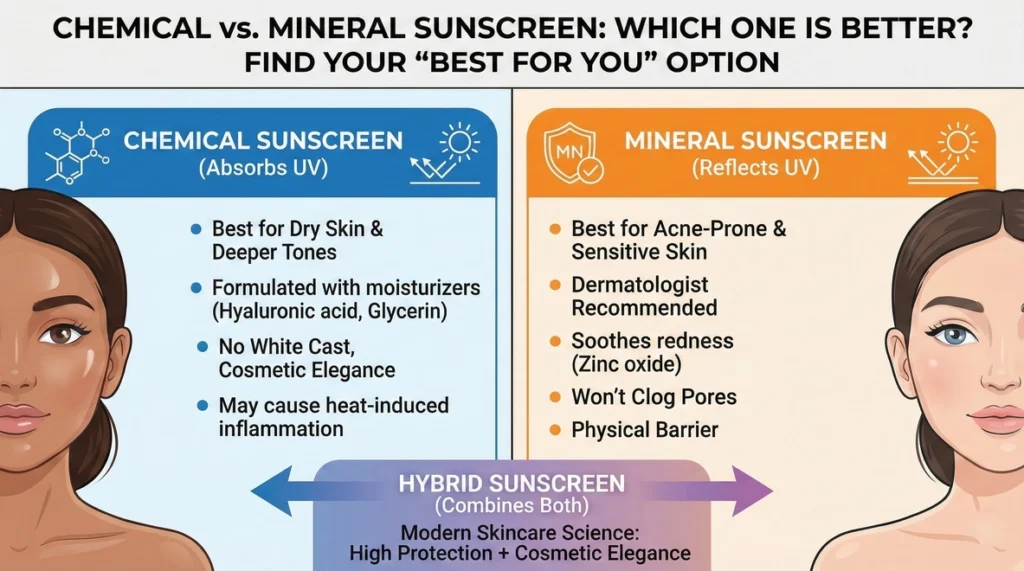
The choice between chemical vs mineral sunscreen ultimately depends on your skin type and lifestyle. There is no single “best” option, but there is definitely a “best for you” option.
If you have acne-prone or sensitive skin, dermatologists usually recommend mineral sunscreens. Chemical filters can clog pores or cause heat-induced inflammation, which exacerbates acne. Zinc oxide, on the other hand, can actually help soothe acne redness.
If you have dry skin or deeper skin tones, chemical sunscreens are often superior. They can be formulated with moisturizing ingredients like hyaluronic acid and glycerin, and they won’t leave you looking ghostly white.
However, modern skincare science is blurring the lines. “Hybrid” sunscreens now exist, combining both mineral and chemical filters to offer the high protection of minerals with the cosmetic elegance of chemicals.
In Short :
| Feature | Chemical Sunscreen | Mineral Sunscreen |
| Active Ingredients | Avobenzone, Oxybenzone, Octinoxate | Zinc Oxide, Titanium Dioxide |
| Acne/Sensitivity | Can sometimes cause irritation/clogging | Generally less irritating; excellent for sensitive skin |
| White Cast | Minimal to None | Often leaves a mild white cast (especially older formulas) |
| Application Time | Wait 15–20 minutes before sun exposure | Effective immediately |
| Best For | Daily quick makeup application, darker skin tones | Sensitive skin, children, post-procedure skin |
Ingredients to Avoid in Sunscreen
Not all sunscreens are created equal. When analyzing the chemical vs mineral sunscreen labels, keep an eye out for these potentially harmful ingredients:
1. Oxybenzone
This is perhaps the most controversial ingredient in the chemical vs mineral sunscreen debate. Oxybenzone is a known endocrine disruptor, meaning it can mimic hormones and potentially interfere with the hormonal system. It is also highly linked to skin allergies.
2. Octinoxate
Similar to Oxybenzone, this chemical filter has been detected in breast milk and urine samples, raising concerns about systemic absorption.
Both Oxybenzone and Octinoxate have been proven to bleach coral reefs and damage marine life. If you are swimming in the ocean, choosing a mineral sunscreen (specifically “non-nano Zinc Oxide”) or a reef-safe chemical formula is crucial for the environment.
3. Benzene
This is not an ingredient but a contaminant often found in aerosol spray sunscreens. It is a known carcinogen. While not intentional, it is safer to stick to lotions or sticks if you are worried about contamination.
4. Alcohol (Denatured)
High amounts of alcohol are often added to chemical sunscreens to make them dry faster. However, this can strip the skin barrier and cause dehydration.
How and When to Apply Sunscreen Correctly
Even if you choose the winner of the chemical vs mineral sunscreen battle, it won’t work if you apply it incorrectly.
The Golden Rule: The 2-Finger Method
Most people do not apply enough. To get the SPF number labeled on the bottle, you need to apply two full fingers lengths (index and middle finger) of product for your face and neck.
Order of Application
The correct order of skincare is vital for efficacy:
- Cleanser
- Toner/Serums
- Moisturizer
- Sunscreen (This is always the last step of skincare)
- Primer
- Foundation/Makeup
Wait, Sunscreen Before Primer? Yes. Sunscreen needs to bond with your skin (chemical) or form a uniform layer over it (mineral). If you apply primer first, the sunscreen cannot protect your skin cells effectively. Apply your SPF, let it set for 5-10 minutes until it forms a film, and then apply your primer gently without rubbing too hard.
Chemical vs Mineral Sunscreen: The Final Verdict
So, how do you choose? The “best” sunscreen is simply the one you will wear every single day. However, we can break it down by skin type:
- Choose Chemical Sunscreen IF: You have no history of sensitivity, you have a deeper skin tone and want zero white cast, or you play sports and need a lightweight, sweat-resistant formula.
- Choose Mineral Sunscreen IF: You have sensitive skin, acne, rosacea, or melasma (heat from chemical sunscreens can trigger melasma). It is also the only recommended choice for children and pregnant women.
Ultimately, the debate of chemical vs mineral sunscreen comes down to your personal lifestyle and skin tolerance. Both are effective at preventing sunburn and premature aging when used correctly.
Sources : American Academy of Dermatology ( Complete information about Sunscreen and Facts ), Cleveland Clinic ( How to Choose the Best Sunscreen )
Important Disclaimer
The content provided by HealthPedia24 is for general informational and educational purposes only and is NOT a substitute for professional medical advice, diagnosis, or treatment.
Always consult a qualified dermatologist or healthcare professional with any questions regarding a medical condition, severe skin allergies, or before starting any new skincare regimen. We recommend performing a patch test before using any new product or ingredient discussed on this site to ensure it does not cause irritation.
HealthPedia24 is not responsible for any individual adverse reactions or consequences resulting from the use of the information provided herein.
For more Information you can read our Privacy Policy and Terms & Conditions.
Frequently Asked Questions (FAQs)
Can I take sunscreen on a plane? Yes, you can take sunscreen on a plane, but it depends on your luggage.
Carry-On: You must follow the TSA 3-1-1 rule. Your sunscreen (lotion or spray) must be in a container of 100ml (3.4 oz) or less and fit in a clear quart-sized bag. Checked Bag: You can pack full-sized bottles (larger than 100ml) in your checked luggage without restrictions.
Which sunscreen is better for oily or acne-prone skin?
Mineral sunscreen is generally the best choice for acne-prone skin. Ingredients like Zinc Oxide are non-comedogenic (won’t clog pores) and have natural anti-inflammatory properties that can help soothe redness. Chemical sunscreens sometimes trap heat in the skin, which can trigger more breakouts.
Which sunscreen is best for dry skin?
Chemical sunscreens are usually better for dry skin. They are often formulated with hydrating ingredients like glycerin and hyaluronic acid. Additionally, they form a thin film that seals in moisture without the chalky, drying feeling that some mineral powders can leave behind.
Is chemical sunscreen safe for pregnancy?
While most sunscreens are considered safe, many doctors recommend switching to Mineral Sunscreen during pregnancy. This is to avoid any potential risk from chemical filters like Oxybenzone, which can enter the bloodstream. Zinc Oxide is considered the safest option for both pregnancy and babies.
Do I really need to wear sunscreen indoors?
Yes. While UVB rays (burning rays) are blocked by glass, UVA rays (aging rays) can penetrate through windows in your home, office, or car. If you sit near a window or drive during the day, you need broad-spectrum protection to prevent premature aging.