
Welcome to HealthPedia24.com, where we believe that skincare shouldn’t be scary—it should be scientific and simple. If there is one ingredient that dermatologists, estheticians, and skincare enthusiasts universally agree upon, it is retinol. It is often called the “gold standard” of skincare, a title it has held for decades.
However, for beginners, starting a retinol journey can feel intimidating. You hear horror stories about peeling skin, redness, and the dreaded “purge.” But here is the truth: when used correctly, retinol is arguably the most effective tool you have to fight aging, acne, and dullness.
In this complete guide on retinol for beginners, we are going to strip away the confusion. We will explain exactly how to layer it with other products like hyaluronic acid and moisturizer, answer the burning question of whether you can use vitamin C with it, and give you a foolproof routine to get the glow without the irritation.
What Is Retinol and How Does It Work?
Before you put it on your face, you need to know what it is. Retinol is a derivative of Vitamin A. It belongs to a larger family of ingredients called retinoids.
Unlike exfoliants (like scrubs or acids) that just sweep away dead skin cells from the surface, this ingredient works from the inside out. It communicates with your skin cells, telling them to behave like younger, healthier cells.
How Does Retinol Work?
Think of your skin’s renewal cycle like a conveyor belt. When you are a child, this belt moves fast—fresh, new skin cells reach the surface constantly. As you age, this conveyor belt slows down. Old cells hang around longer, making skin look dull, accentuating wrinkles, and clogging pores.
Retinol speeds that conveyor belt back up.
- Boosts Cell Turnover: It forces old cells to shed and new cells to rise to the surface faster.
- Stimulates Collagen: It tricks your body into thinking the skin is being repaired, triggering the production of collagen and elastin (the proteins that keep skin bouncy).
- Unclogs Pores: By speeding up turnover, it prevents dead cells from sticking together and clogging your pores, which stops acne before it starts.
The Benefits: What Can Retinol Do for You?
If you stick with it, the benefits are vast. Here is why dermatologists love it:
- Anti-Aging Powerhouse: It significantly reduces the appearance of fine lines and wrinkles by thickening the deeper layers of the skin.
- Acne Treatment: By keeping pores clear and reducing the stickiness of skin cells, it helps prevent breakouts.
- Texture and Tone: It smooths out rough texture and fades hyperpigmentation (dark spots/sun spots) for a more even glow.
- Pore Size: While you can’t physically shrink a pore size determined by genetics, keeping them clear makes them look significantly smaller.
5 Common Retinol Mistakes Beginners Make (Avoid These!)
If you want the benefits without the “burn,” make sure you aren’t committing these skincare sins. These are the most common reasons beginners quit their retinol journey too early.
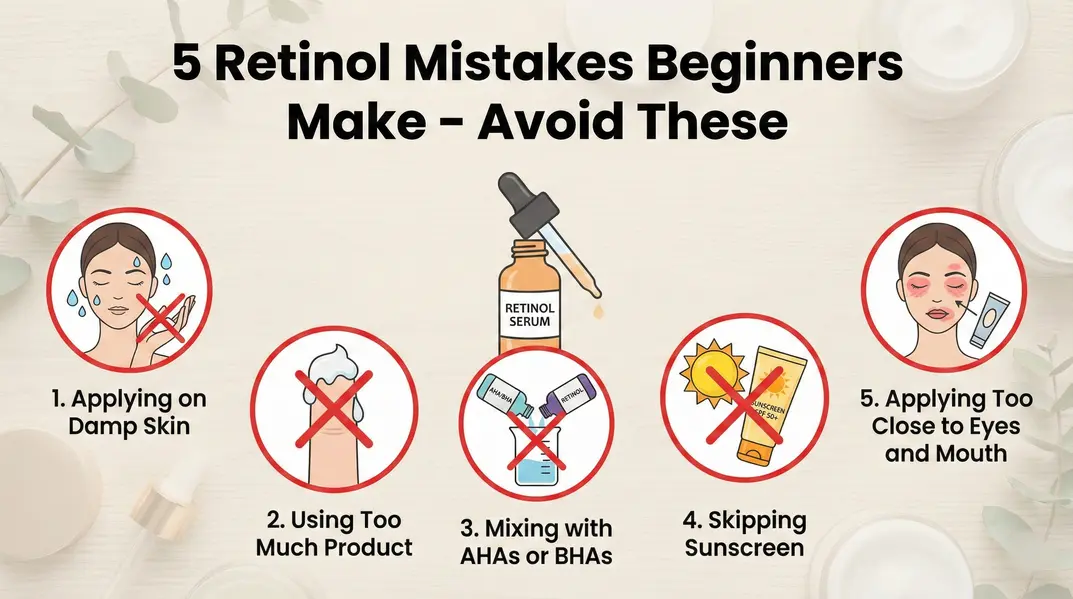
1. Applying on Damp Skin
This is the biggest error. Most skincare products (like moisturizers) work best on damp skin, but retinol is different. Water increases the permeability of your skin, meaning it pulls the ingredient too deep, too fast.
- The Fix: Always wait 15–20 minutes after washing your face to ensure your skin is completely bone dry before application.
2. Using Too Much Product
We are used to slathering on creams, but with retinoids, “less is more.” Applying a thick layer won’t speed up results; it will only speed up a chemical burn.
- The Fix: Stick to the “Pea-Sized Amount” rule for your entire face. Dot it on your forehead, cheeks, and chin, then blend.
3. Mixing with AHAs or BHAs
Exfoliating acids (Glycolic, Salicylic, Lactic) strip dead skin cells. Retinol accelerates cell turnover. Doing both at the same time is like power-sanding your face. It leads to a damaged moisture barrier and severe redness.
- The Fix: Use acids on “exfoliation nights” and retinol on “treatment nights.” Never mix them in the same routine.
4. Skipping Sunscreen
Retinoids reveal fresh, delicate skin cells that are highly susceptible to UV damage. If you use retinol at night but skip SPF in the morning, you are actually accelerating aging and inviting dark spots.
- The Fix: Apply SPF 30 or higher every single morning, rain or shine.
5. Applying Too Close to Eyes and Mouth
The skin around your eyes and the corners of your nose/mouth is much thinner than the rest of your face. Retinol can easily migrate to these areas and cause peeling or cracking.
- The Fix: Use the “buffer technique.” Apply a little eye cream or Vaseline around your eyes and lips before your retinol to create a protective seal.
How to Use Retinol Correctly (The Beginner’s Routine)
This is the most critical part of this guide. As a beginner, you cannot just slap it on like a moisturizer. You need a strategy to avoid irritation.
Step 1: Start Slow (The “Low and Slow” Rule)
Do not use it every night. Start by applying it two nights a week (e.g., Monday and Thursday). After two weeks, if your skin is happy, increase it to every other night.
Step 2: The Pea-Sized Amount
More is not better. You only need a pea-sized amount for your entire face. Using more won’t make it work faster; it will just burn your skin barrier.
Step 3: Application Order (The Most Common Questions)
1. Retinol Before or After Hyaluronic Acid?
The answer is: After. Hyaluronic Acid acts as a sponge and works best on damp skin. Retinol works best on dry skin.
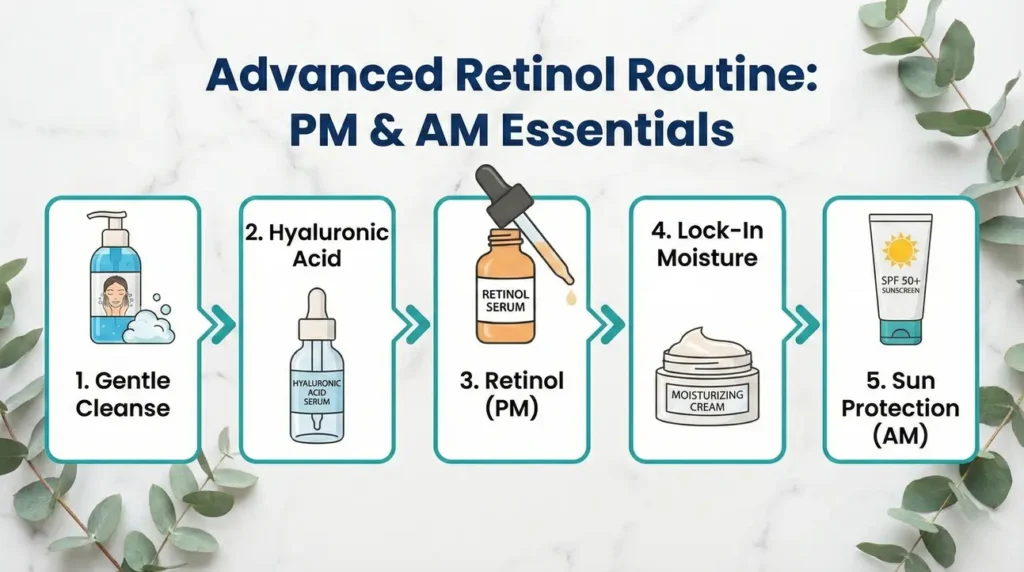
- Step 1: Cleanse your face.
- Step 2: Apply Hyaluronic Acid to damp skin.
- Step 3: Wait for your skin to dry completely (wait 2-5 minutes).
- Step 4: Apply your retinol.
2. Retinol Before or After Moisturizer?
The answer is: It depends on your sensitivity.
- Standard Method (Maximum Effect): Apply retinol first, let it absorb for 5 minutes, then apply moisturizer.
- The Sandwich Method (Best for Beginners): If you have sensitive skin, apply a thin layer of light moisturizer first. Let it dry. Apply your retinol. Then, apply a thick layer of moisturizer on top. This “sandwiches” the active ingredient, buffering its intensity without stopping it from working.
3. Can I Use Vitamin C with Retinol?
The short answer is yes, but not at the same time.
Using them together in the same routine (e.g., layering them one after another at night) is a recipe for irritation. Both are potent actives. Instead, separate them by time of day:
- Morning (AM): Vitamin C + Sunscreen. (Vitamin C protects you from free radicals during the day).
- Night (PM): Retinol + Moisturizer. (Retinol repairs your skin while you sleep).
This power couple creates the ultimate 24-hour anti-aging cycle.
Ingredient Checklist: What to Mix and What to Avoid
When you start using retinol for beginners, your skin becomes more sensitive. You need to audit your other products.
Good Ingredients to Pair (Best Friends)
- Niacinamide: This helps strengthen the skin barrier and calms redness, making it the perfect partner to counteract irritation.
- Ceramides: These rebuild the “mortar” of your skin cells, keeping hydration locked in.
- Hyaluronic Acid: Adds hydration back into the skin to combat dryness.
- Peptides: Support collagen production.
Ingredients to Avoid (The Enemies)
- AHAs/BHAs (Glycolic, Salicylic Acid): Do not use exfoliating acids on the same night. It is too much exfoliation and will destroy your barrier.
- Benzoyl Peroxide: This can cancel out the effects of Vitamin A. Use them on alternate nights if needed for acne.
- Physical Scrubs: Put the walnut scrub away. Your skin is already exfoliating chemically; you don’t need to scrub it physically.
Side Effects and Precautions
When you start retinol, your skin goes through an adjustment period known as “retinization.”
What to Expect
- Dryness and Flaking: This is normal as your cell turnover speeds up.
- Mild Redness: A sign of increased blood flow and sensitivity.
- The Purge: You might see more breakouts in the first 2-4 weeks. This is actually a good sign—it means the retinol is pushing deep-seated congestion to the surface.
Who Should NOT Use It?
- Pregnant or Breastfeeding Women: High doses of Vitamin A can be harmful to fetal development. Switch to Bakuchiol (a plant-based alternative) during pregnancy.
- Compromised Skin Barrier: If your skin is stinging, red, or raw, fix your barrier first before starting any retinoid.
Expert Tips for Success
Here are a few pro tips we always recommend at HealthPedia24.com:
- The Neck Rule: The skin on your neck is thinner than your face. If you apply it there, mix it with moisturizer first.
- Avoid Delicate Areas: Do not apply it on your eyelids or directly on the lips. You can apply a little Vaseline or eye cream around your eyes and mouth before application to act as a shield.
- Sunscreen is Non-Negotiable: Retinol makes your fresh, new skin cells more sensitive to UV rays. If you are not wearing SPF 30+ every single morning, do not use this product. You will do more harm than good.
Conclusion
Starting your journey with retinol for beginners is a marathon, not a sprint. It is one of the few ingredients that genuinely reverses signs of aging and clears acne, but it demands patience.
Don’t be discouraged by a little dryness in the beginning. Stick to the “Sandwich Method,” keep your hydration high, and never skip sunscreen. Your future self (with glowing, wrinkle-free skin) will thank you.
For more deep dives into skincare science, keep exploring HealthPedia24.com.
Sources : American Academy of Dermatology ( Retinol function and Benefits ), Healthline ( Retinol vs Vitamin C , Side effects , who should use and who shouldn’t etc. ), Harvard Health Publishing ( Retinoids and wrinkles ).
Important Disclaimer
The content provided by HealthPedia24.com is for general informational and educational purposes only and is NOT a substitute for professional medical advice, diagnosis, or treatment.
Always consult a qualified dermatologist or healthcare professional with any questions regarding a medical condition, skin disorders, or before starting any new potent skincare regimen like retinoids. We recommend performing a patch test on your inner arm 24 hours before using any new product. HealthPedia24.com is not responsible for any individual adverse reactions resulting from the use of the information provided herein.
For more information you can read our Privacy Policy and Terms & Conditions.
Frequently Asked Questions (FAQs)
Can I use Vitamin C with retinol?
Yes, but do not layer them one after another. Use Vitamin C in your morning routine to protect your skin, and use retinol in your evening routine to repair your skin.
Retinol before or after moisturizer?
If you have sensitive skin or are a beginner, apply moisturizer first, then retinol, then moisturizer again (Sandwich Method). If your skin is tough, apply retinol first on dry skin, followed by moisturizer.
Which ingredients should I avoid while using it?
void using Alpha Hydroxy Acids (AHAs like glycolic acid), Beta Hydroxy Acids (BHAs like salicylic acid), and benzoyl peroxide at the exact same time as your retinoid.
How long does it take to see results?
Patience is key. You may see acne improvements in 4-6 weeks, but for anti-aging benefits like wrinkle reduction and skin smoothing, it typically takes 3 to 6 months of consistent use.
Who should not use it?
Pregnant or breastfeeding women should avoid all Vitamin A derivatives (retinoids) as they can impact fetal development. People with rosacea or eczema should consult a dermatologist first.