
Welcome to HealthPedia24.com, your trusted guide to skin health. If you have been following our recent posts about the skin barrier, you might have realized that a damaged barrier is the root cause of almost every skin issue—from acne to extreme dryness.
But how do you actually fix a broken wall? You need the right cement. In the world of skincare, that cement is called ceramides.
While trendy ingredients like Vitamin C and Retinol get all the glory for brightening and anti-aging, this ingredient is the quiet workhorse that keeps your skin holding together. Without it, your skin is essentially a leaky bucket, losing water and letting irritants in.
In this deep dive, we are going to explore the science behind this essential lipid, why your skin stops producing it, and how you can replenish it to get that plump, healthy bounce back.
What Are Ceramides?
To understand ceramides, we need to zoom in on the anatomy of your skin. Your skin’s outer layer (the stratum corneum) is biologically designed to keep you safe.
Ceramides are long-chain lipids (fats) that occur naturally in your skin. In fact, they make up over 50% of your skin’s composition by weight. This is why they are so vital; they aren’t just an “extra” additive—they are literally half of what your outer skin is made of.
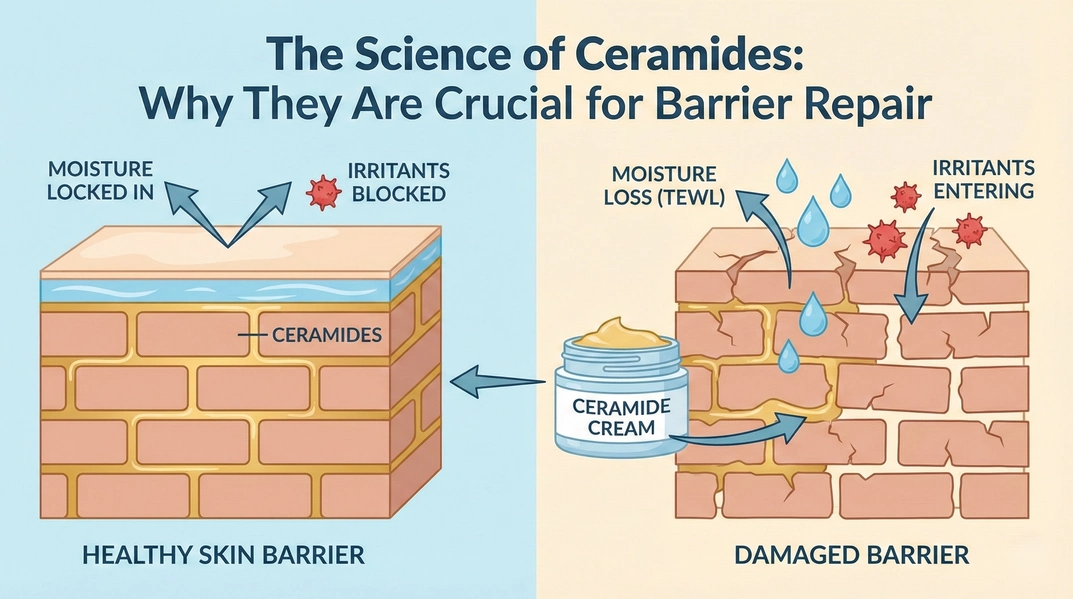
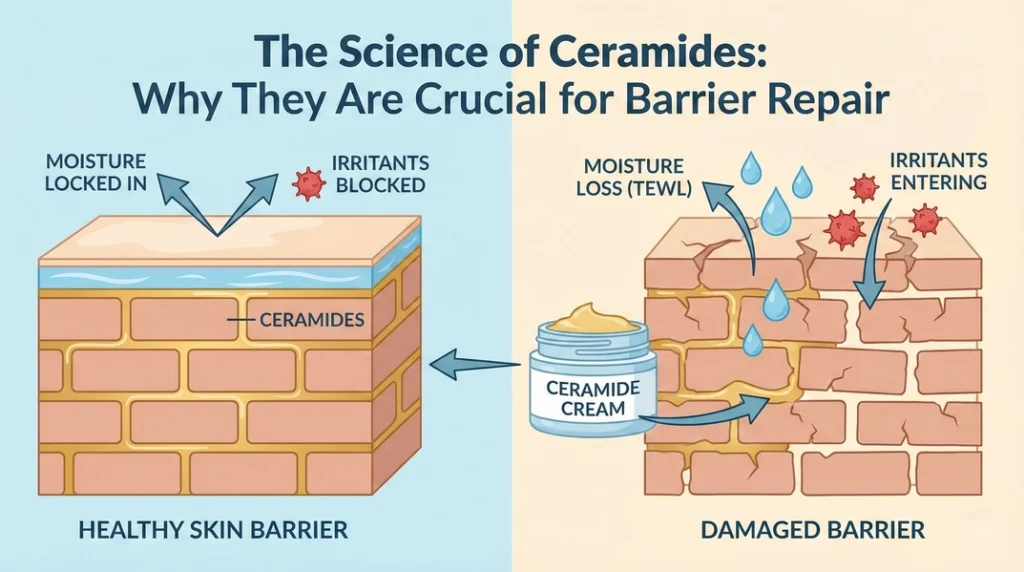
Think of your skin cells as the “bricks.” These bricks need something to hold them together to form a strong wall. These lipids act as the “mortar” or glue that sits between the skin cells.
How Do Ceramides Work for Skin?
The primary function of ceramides is to maintain the integrity of your skin barrier. This is the “brick and mortar” structure we mentioned earlier, scientifically known as the stratum corneum.
When you apply a product containing ceramides, the ingredients don’t just sit on top of your face. They are “skin-identical,” meaning your skin recognizes them. They slip into the gaps between your skin cells and lock into place.
Once they are in position, they perform two critical jobs:
- Water Retention: They create a waterproof seal that prevents Trans-Epidermal Water Loss (TEWL). This keeps hydration locked deep inside the skin.
- Protection: They shield the deeper layers of skin from environmental aggressors. This is why ceramides for barrier repair are so effective—they literally rebuild the shield that keeps your skin safe.
Benefits: Why Your Routine Needs This
You might be wondering if you really need a dedicated product for this. If you want healthy skin, the answer is yes. Here is why ceramides for barrier repair are non-negotiable:
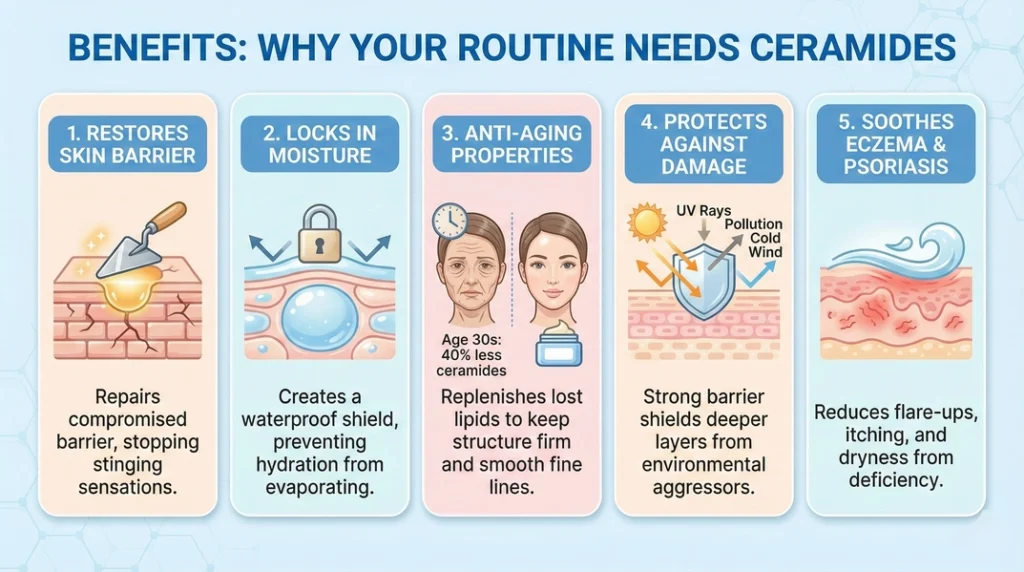
1. Restores the Skin Barrier
This is the primary function. By replenishing the lipid levels, you repair the compromised barrier, stopping the stinging sensation associated with sensitive skin.
2. Locks in Moisture
Unlike humectants that just grab water, these lipids seal it in. They create a waterproof shield that prevents hydration from evaporating, keeping your skin plump for hours.
3. Anti-Aging Properties
As we age, our body produces fewer lipids naturally. By the time you are in your 30s, you have lost about 40% of your skin’s natural ceramides. Replenishing them topically keeps the skin structure firm and smooths out fine lines caused by dehydration.
4. Protects Against Environmental Damage
A strong barrier means UV rays, pollution, and cold wind have a harder time damaging the deeper layers of your skin.
5. Soothes Eczema and Psoriasis
Conditions like eczema are often linked to a genetic deficiency in ceramides. Adding them back into the skin can significantly reduce flare-ups, itching, and dryness.
Ceramides vs. Hyaluronic Acid: Which is Better?
This is a classic showdown in the skincare world. Both are famous for hydration, but they work in completely different ways.
- Hyaluronic Acid (HA) is a humectant. It works like a sponge, pulling water from the air or deeper skin layers to hydrate the surface. It adds water.
- Ceramides are occlusives and emollients. They work like a seal. They stop that water from evaporating.
Which is better? Neither. They are teammates. If you use Hyaluronic Acid without a seal, the water can evaporate, leaving your skin drier than before. If you use ceramides alone, they will seal the skin, but they won’t add new hydration.
The Verdict: Use both. Apply Hyaluronic Acid first to grab the water, and follow up with a moisturizer rich in ceramides to lock it in.
What Foods Are High in Ceramides?
While topical skincare is the fastest way to fix a broken barrier, you can also support your skin from the inside out. Yes, you can eat your skincare!
“Phytoceramides” are plant-derived ceramides found in many healthy foods. Including these in your diet can help improve skin hydration levels over time:
- Wheat Germ: One of the highest sources.
- Soybeans: Great for boosting skin elasticity.
- Milk: contain sphingolipids (a type of lipid).
- Spinach: A green leafy source.
- Brown Rice: Contains glucosylceramides.

Eating a diet rich in healthy fats (like Omega-3s from salmon or walnuts) also provides the raw materials your body needs to produce its own ceramides.
How to Use Ceramides Correctly in Your Routine
The beauty of ceramides is that they are incredibly easy to use. Unlike retinol or acids, they don’t cause irritation, so you can’t really “mess up.” However, there is an optimal way to apply them.
Step 1: Cleansing
Use a gentle cleanser. Some cleansers even contain ceramides to prevent stripping your skin while you wash.
Step 2: Hydration (The Sponge)
Apply your toner, essence, or Hyaluronic Acid serum while your skin is still damp.
Step 3: The Ceramide Layer (The Seal)
Apply your ceramide-rich moisturizer. This should generally be the last step in your routine (before sunscreen in the AM).
- Morning: Look for a lightweight lotion with ceramides.
- Night: Opt for a thicker cream or sleeping mask to repair the barrier while you sleep.
Can I mix it?
Yes! You can layer ceramides with Vitamin C, Retinol, Niacinamide, and Peptides. In fact, using them after strong actives (like retinol) is highly recommended to buffer side effects.
Before or After Moisturizer?
Since ceramides are usually the main ingredient in your moisturizer, you don’t need to layer them separately. However, if you are using a pure Ceramide Serum (for extreme damage), apply the serum before your heavy cream.
Side Effects and Precautions
Are there any risks? Honestly, ceramides are “skin-identical” ingredients. Because your body naturally produces them, allergic reactions are extremely rare. They are safe for:
- Sensitive skin
- Eczema and Rosacea
- Pregnancy and breastfeeding
- Acne-prone skin
Precaution: While the ingredient itself is safe, check the other ingredients in the jar. Heavy creams can sometimes clog pores (comedogenic) if they contain heavy oils like coconut oil. If you have oily skin, look for a lightweight, gel-based formula containing these lipids.
Allergies: While rare, some people might react to plant-derived phytoceramides (like those from wheat or soy) if they have severe food allergies (e.g., Celiac disease or soy allergy), though topical reactions are uncommon.
Ingredient Checklist: The Golden Ratio
Not all barrier repair creams are created equal. For ceramides to actually penetrate the skin and fix the wall, they work best when paired with two other ingredients in a specific ratio.
The “Golden Ratio” (Look for this!)
Dermatologists suggest a ratio of 3:1:1 or 1:1:1 of these three lipids:
- Ceramides
- Cholesterol (Yes, it’s good for your skin!)
- Fatty Acids (like Linoleic acid)
When these three are present together, barrier repair happens up to 50% faster.
Ingredients to Avoid (The Barrier Destroyers)
If you are trying to repair your skin, avoid products containing:
Physical Scrubs: Walnut shells or apricot scrubs can physically scratch the barrier you are trying to heal.
Sodium Lauryl Sulfate (SLS): Found in face washes, this strips away your natural lipids.
High Alcohol Content: Denatured alcohol dries out the “mortar.”
Expert Tips for Maximum Barrier Repair
- Look for Packaging: Ceramides are relatively stable, but they work best in airtight pumps or tubes rather than open jars, which expose the formula to air and bacteria.
- The “Damp Skin” Rule: Always apply your ceramide moisturizer when your skin is slightly damp. This traps extra moisture in the skin before the “mortar” sets.
- Consistency is Key: Barrier repair doesn’t happen overnight. You need to use ceramides consistently twice a day for at least 2 to 4 weeks to see a full restoration of a damaged barrier.
Conclusion
Understanding the science of ceramides changes the way you look at skincare. It’s not just about looking pretty; it’s about biological health.
Whether you have over-exfoliated with acids, are suffering from winter dryness, or dealing with eczema, ceramides are the solution. They are the glue that holds your skin together, keeping it strong, resilient, and hydrated.
So, check the back of your moisturizer bottle today. If you don’t see them listed, it might be time for an upgrade. Your skin barrier will thank you.
Sources : PubMed – National Institutes of Health ( Ceramides science ), Healthline – Medically Reviewed ( All about Ceramides )
Medical Disclaimer
The content provided by HealthPedia24.com is for general informational and educational purposes only and is NOT a substitute for professional medical advice, diagnosis, or treatment.
Always consult a qualified dermatologist or healthcare professional with any questions regarding a medical condition, skin disorders, or before starting any new skincare regimen. We recommend performing a patch test on your inner arm 24 hours before using any new product. HealthPedia24.com is not responsible for any individual adverse reactions resulting from the use of the information provided herein.
Frequently Asked Questions (FAQs)
What are ceramides?
They are lipids (fat molecules) found naturally in the high concentrations in the uppermost layers of the skin. They make up over 50% of skin’s composition and play a vital role in determining how your skin looks and responds to environmental threats.
How to use ceramides correctly?
The best way is through a leave-on product like a moisturizer. Use it twice daily—morning and night. Apply it as the last step of your routine (before sunscreen in the AM) to lock in hydration.
Which is better: Ceramides or Niacinamide?
They do different things. Niacinamide tells your skin to make more lipids. Ceramides are the lipids. For the best barrier repair, use a product that contains both.
How to use ceramides with retinol?
Apply your retinol first on dry skin, wait a few minutes, and then apply your ceramide cream. This helps reduce the dryness and flaking often caused by retinol.
What foods are high in ceramides?
Wheat germ, soybeans, dairy, brown rice, and spinach are excellent dietary sources to help support skin health from within.