
Welcome to HealthPedia24.com, your ultimate destination for simplifying skincare science. If you have been scrolling through social media lately, you have probably seen influencers rubbing oil on their faces and swearing it cleared their acne. It sounds counterintuitive, right? Putting oil on your face to clean it?
But this isn’t just a trend; it is the backbone of the famous “Glass Skin” routine. It is called double cleansing, and it might be the missing link between you and the clear skin you have been chasing.
Many of us wash our faces and think we are clean, only to find makeup residue on our towel or wake up with a new clogged pore. Why? Because water-based soaps can’t dissolve oil-based debris. In this detailed guide, we are going to break down exactly how double cleansing works, why it is a game-changer for removing sunscreen, and how to do it without causing breakouts.
What Is Double Cleansing and How Does It Work?
At its core, double cleansing is exactly what it sounds like: washing your face twice. However, it is not just about repeating the same step. It relies on a specific two-step method using two different types of cleansers to target different types of debris.
The Science: Like Dissolves Like
Basic chemistry tells us that oil and water do not mix.
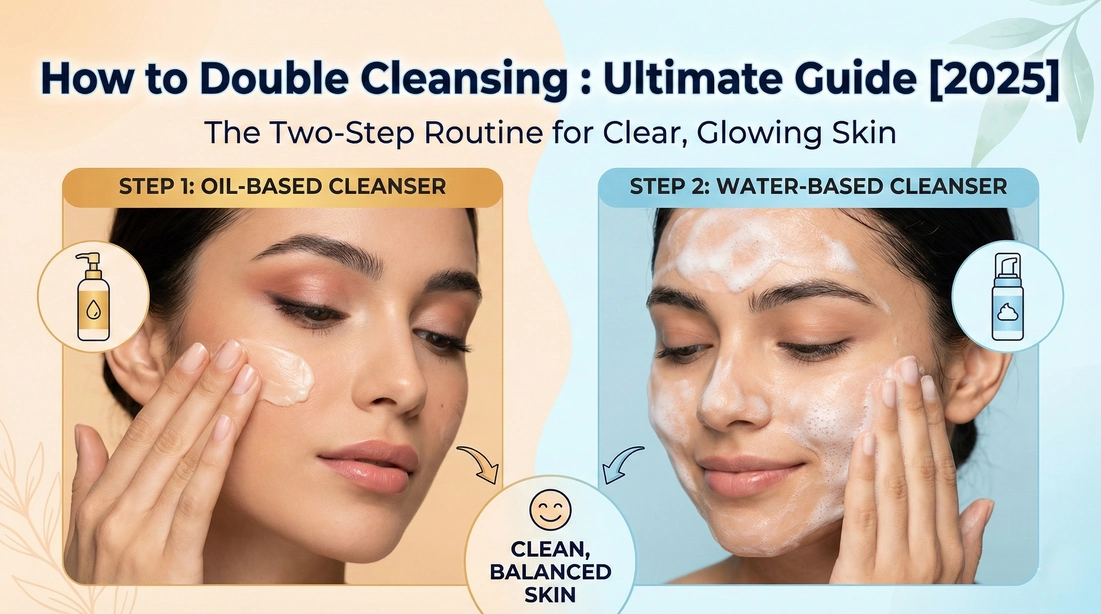
- Step 1 (Oil-Based Cleanser): This step uses a cleansing oil, balm, or micellar water. Since “oil dissolves oil,” this cleanser binds to the sebum (skin oil), makeup, and sunscreen sitting on your skin’s surface and breaks them down.
- Step 2 (Water-Based Cleanser): Once the surface layer is removed, you follow up with a water-based foam, gel, or cream cleanser. This step cleans deep into the pores and removes sweat, dirt, and any residue from the oil cleanser.
By using this method, you ensure your skin is thoroughly clean without scrubbing it raw.
The Benefits: Why Your Skin Needs This Method
Why add an extra step to your tired evening routine? Because the payoff is huge. Incorporating double cleansing can transform the texture and clarity of your skin.
1. Completely Removes SPF and Makeup
Sunscreen is the most important anti-aging product, but it is notoriously difficult to remove. If left on overnight, it can clog pores. An oil cleanser melts SPF in seconds, something a regular soap struggles to do.
2. Prevents Breakouts
Acne often starts with a clogged pore—a mixture of dead skin cells and excess oil. By effectively dissolving that excess sebum during the first step of double cleansing, you prevent the “plug” from forming in the first place.
3. Enhances Product Absorption
Think of your skin like a canvas. If it is covered in a film of grime, your expensive serums and moisturizers cannot penetrate. A double-cleansed face allows active ingredients (like Retinol or Vitamin C) to absorb deeper and work better.
4. Gentler on the Barrier
Paradoxically, washing twice can be gentler than washing once. Because the oil dissolves makeup effortlessly, you don’t have to scrub, rub, or tug at your skin with a washcloth to get it clean.
How to Double Cleanse Correctly (Step-by-Step)
This is where most beginners mess up. If you do it wrong, you might end up with more pimples. Follow this routine to master double cleansing:
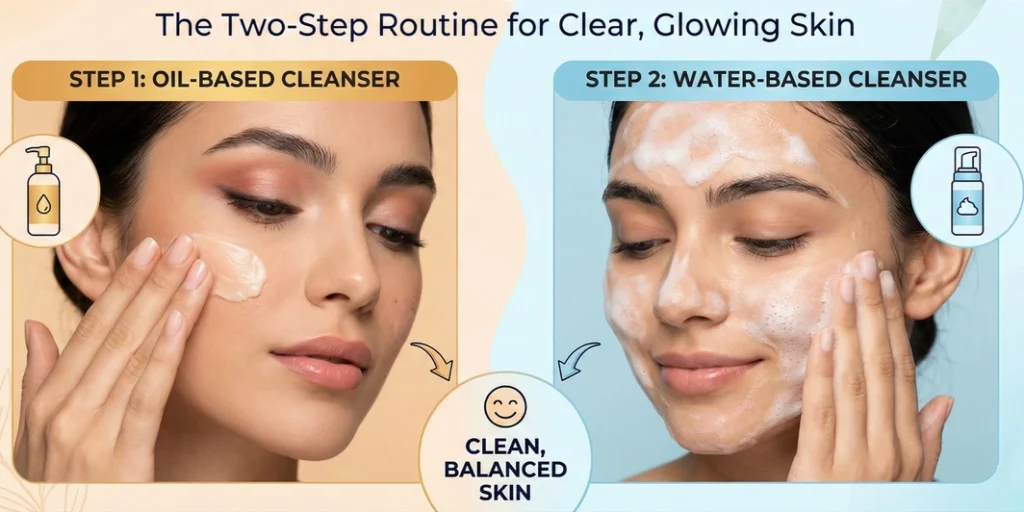
Step 1: The Oil Cleanse
- Start Dry: This is crucial. Apply the cleansing oil or balm to dry skin with dry hands. Do not wet your face yet!
- Massage: Gently massage the oil over your face for 60 seconds. Focus on the nose and chin where pores are clogged. You might even feel little “grits” (hardened oil plugs) popping out.
- Emulsify: This is the magic moment. Wet your hands with a little water and massage your face again. The oil should turn milky white. This emulsion allows the oil to rinse off with water.
- Rinse: Splash with lukewarm water until the milky texture is gone.
Step 2: The Water Cleanse
- Damp Skin: Now that your face is wet, apply your regular water-based cleanser (gel or foam).
- Cleanse: Massage for another 60 seconds. This removes the leftover oil residue and cleans the sweat/dirt.
- Final Rinse: Wash everything off and pat dry with a clean towel.
Before & After Routine Context
- When: Do this in the evening (PM) only. You usually don’t need to double cleanse in the morning unless you wore a sleeping mask.
- Follow Up: Immediately follow with a hydrating toner or moisturizer while your skin is still damp to lock in hydration.
Your PM Routine:
- Double Cleanse (Oil first, then Water).
- Toner.
- Serums (Retinol/Niacinamide).
- Moisturizer.
Also Visit:
Hydration and Moisture: Do You Need Both? [2025]Ingredient Checklist: What to Look For
Not all oils are created equal. The success of your double cleansing routine depends on picking the right ingredients for your skin type.
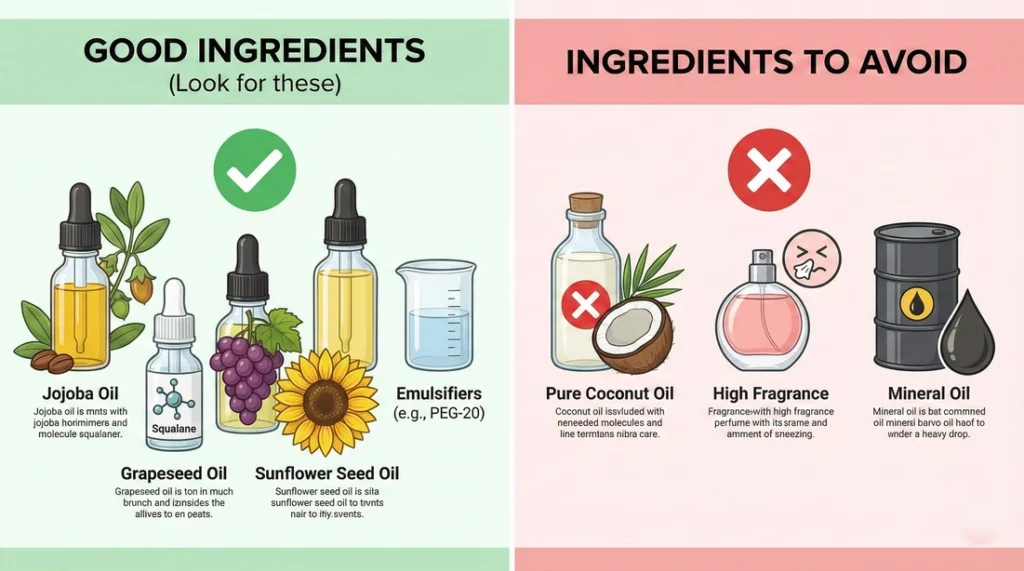
Good Ingredients (Look for these)
These oils are generally non-comedogenic (won’t clog pores) and effective at breaking down makeup:
- Jojoba Oil: Mimics human skin oil, making it great for all skin types.
- Squalane: Lightweight and hydrating.
- Grapeseed Oil: Excellent for oily/acne-prone skin as it is astringent.
- Sunflower Seed Oil: Gentle and rich in Vitamin E.
- Emulsifiers: (e.g., PEG-20 Glyceryl Triisostearate). These are essential chemicals that allow the oil to wash away with water.
Ingredients to Avoid
- Pure Coconut Oil: While natural, it is highly comedogenic for the face and can cause severe breakouts for many people.
- High Fragrance: Can irritate sensitive eyes when removing mascara.
- Mineral Oil (for some): While safe for many, it can feel heavy and harder to rinse off if the formula isn’t elegant.
Double Cleansing for Different Skin Types
A common myth is that oily skin shouldn’t use oil cleansers. This is false.
Oily & Acne-Prone Skin
Oil attracts oil. An oil cleanser can actually help pull excess sebum out of your pores (often called “oil gritting”). Look for lightweight oils like Grapeseed or a Salicylic Acid-based wash for the second step.
Dry & Sensitive Skin
Double cleansing is fantastic for dry skin because oil cleansers are non-stripping. Look for nourishing balms with Shea Butter or Ceramides. For the second step, use a non-foaming cream cleanser to keep the barrier intact.
Side Effects and Precautions
While generally safe, double cleansing isn’t foolproof.
- The “Purge” vs. Breakout: If you start getting tiny whiteheads immediately, it might not be a purge. It might be that you aren’t rinsing the oil off completely.
- Over-Stripping: If your second cleanser is too harsh (like a high-pH foaming wash), doing two steps might dry out your skin. Switch to a gentle, hydrating second cleanser.
- Eye Irritation: Some oils can blur your vision temporarily if they get in your eyes. Look for “ophthalmologist-tested” balms.
Expert Tips for Success
At HealthPedia24, we love optimizing routines. Here are some pro tips:
- The 60-Second Rule: Spend a full minute massaging the oil. This gives it enough time to break down stubborn waterproof mascara.
- Balm vs. Oil: If you travel often, use a Cleansing Balm (solid). If you are at home, a Cleansing Oil (liquid) is faster to use.
- Don’t Skip the Neck: We apply sunscreen to our necks too! Make sure you bring the double cleansing method down to your neck to prevent clogged pores there.
Conclusion
Double cleansing is not just another passing trend; it is the foundation of a healthy skincare routine. By taking the time to properly remove the day’s accumulation of sunscreen, sebum, and pollution, you set your skin up for success.
Whether you are dealing with acne, dryness, or signs of aging, clear skin starts with clean skin. Try incorporating this method into your nightly ritual for two weeks, and you will likely see a visible difference in your glow.
For more science-backed beauty advice, keep exploring HealthPedia24.com.
Sources : Healthline ( OIl Cleansing method, Ingredients, Benefits etc. ), Cleveland Clinic ( What is Double Cleansing?, Method etc. ), Health.com ( 60-Second Rule ).
Important Disclaimer
The content provided in this article, “How to Double Cleansing : Ultimate Guide [2025],” by HealthPedia24.com is for general informational and educational purposes only and is NOT a substitute for professional medical advice, diagnosis, or treatment.
Always consult a qualified dermatologist or healthcare professional with any questions regarding a medical condition, severe acne, or persistent skin irritation. We recommend performing a patch test on your inner arm 24 hours before using any new cleansing product. HealthPedia24.com is not responsible for any individual adverse reactions resulting from the use of the information provided herein.
For more Information you can read our Privacy Policy and Terms & Conditions.
How do you double cleanse?
It is a two-step process performed in the evening. First, massage an oil-based cleanser onto dry skin to dissolve makeup and sunscreen. Rinse it off. Second, use a water-based cleanser (gel or foam) to wash the skin and remove any residue.
Should I double cleanse everyday?
You should double cleanse every night, especially if you wore sunscreen or makeup that day. You do not need to do it in the morning; a simple water-based wash or just rinsing with water is sufficient for the AM routine.
How to double cleanse at home naturally?
You can use natural carrier oils like Jojoba or Hemp Seed oil as the first step. However, because natural oils do not have “emulsifiers,” they won’t rinse off with water. You must use a warm, damp microfiber cloth to gently wipe the oil off before moving to your second cleanser.
Why am I getting pimples when double cleansing?
This usually happens for two reasons:
1. You are using an oil that is too heavy for your skin (like Coconut oil).
2. You are not “emulsifying” effectively. If you don’t add water to turn the oil milky and rinse it fully, the leftover oil can trap bacteria and clog pores.
Who should avoid double cleansing?
Technically, everyone can benefit from it. However, those with extremely sensitive skin or active Rosacea should be careful with the massaging step. They might prefer using Micellar Water as the first step instead of an oil to minimize friction.
Does double cleansing help with oily skin?
Yes! It is excellent for oily skin. Oil dissolves oil. An oil cleanser effectively pulls out excess sebum from the pores without stripping the skin, which can actually help regulate oil production over time.