
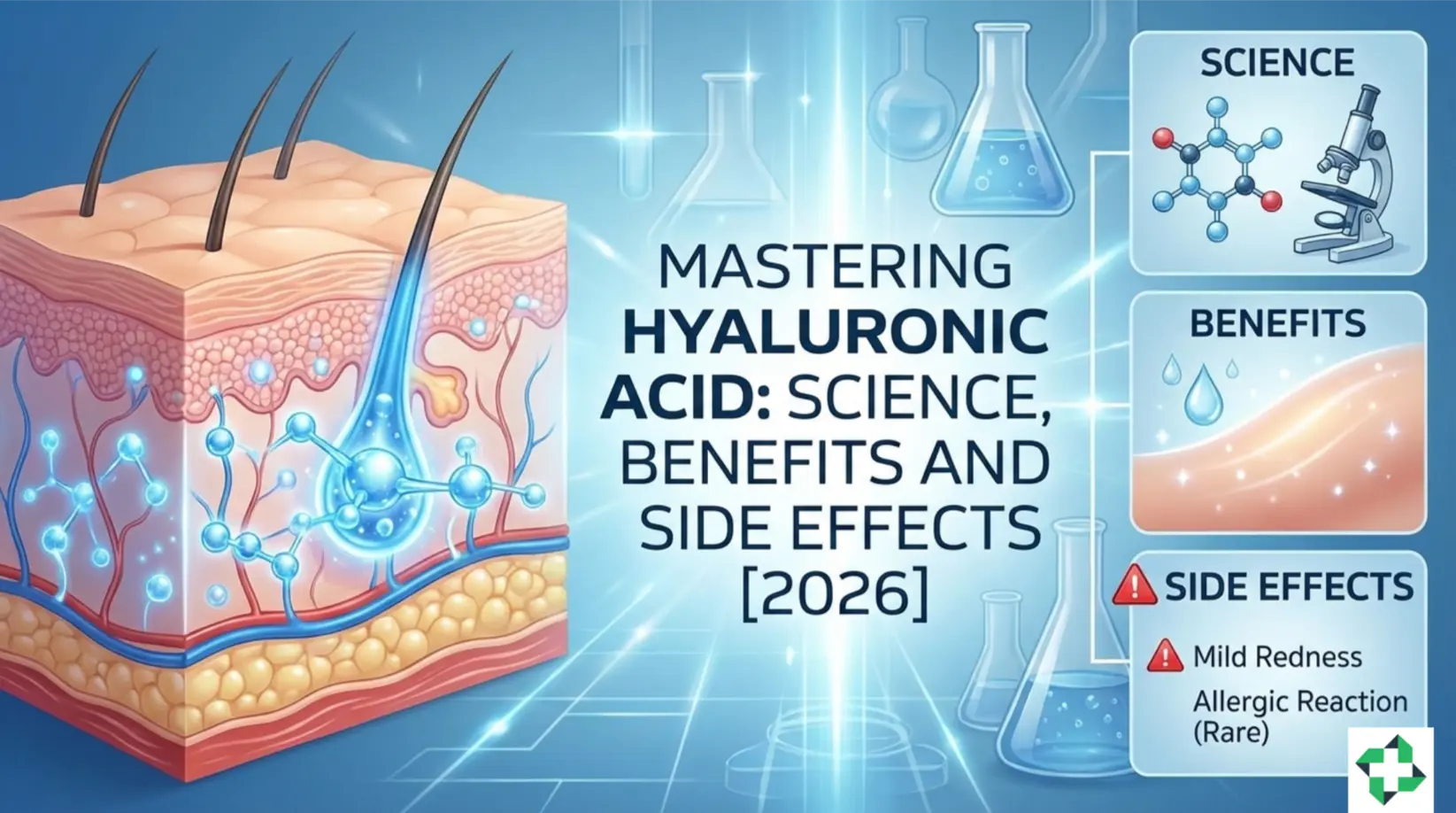
If you have ever felt like your skin is tight, dull, or just “thirsty” regardless of how much water you drink, you are not alone. In the quest for a glowing complexion, hydration is the foundation of everything. Enter the superstar ingredient that has taken the beauty world by storm: hyaluronic acid.
Welcome to HealthPedia24.com, your trusted partner in decoding skincare science. Today, we are moving beyond the buzzwords to understand why this specific molecule is considered a “must-have” by dermatologists for almost every skin type. Unlike the exfoliating acids we often discuss (like salicylic or glycolic), this one isn’t here to peel your skin—it is here to quench it.

What Exactly is Hyaluronic Acid?
First, let’s clear up a common misconception. The word “acid” usually sounds harsh or stripping, but hyaluronic acid is actually a sugar molecule (a glycosaminoglycan) that your body produces naturally. You can find it in your skin, eyes, and joints, where its main job is to retain water and keep things lubricated.
Think of it as a biological sponge. It is a humectant, which means it acts like a magnet for moisture. In fact, this incredible molecule can hold up to 1,000 times its own weight in water. As we age, our natural stores of this molecule deplete, leading to a loss of volume and the formation of fine lines. This is why adding it back through skincare is so effective.
The Science: Molecular Weight and Molar Mass
Not all hyaluronic acid is created equal. The effectiveness of a serum depends entirely on its molecular weight. Because HA is a large polymer, it often struggles to penetrate the skin barrier.
Understanding Molecular Weights
- High Molecular Weight (HMW): These larger molecules sit on the surface of the skin. They form a film that prevents moisture from evaporating (Transepidermal Water Loss).
- Low Molecular Weight (LMW): These smaller molecules can travel deeper into the epidermis, providing hydration to the lower layers and offering a more significant “plumping” effect.
Technical Data
In laboratory settings, the hyaluronic acid molar mass is a critical factor for formulation.
Molecular Weight Hyaluronic Acid: Most high-quality serums use a “multi-molecular” approach, blending weights between 50kDa and 1,000kDa to hydrate every layer of the skin.
Standard HA Molar Mass: Often ranges from 5kDa (very low) to 2,000kDa (very high).
How It Works: The Magnet for Moisture
Hyaluronic acid is a humectant. This means it draws moisture from its surroundings and pulls it into the skin.
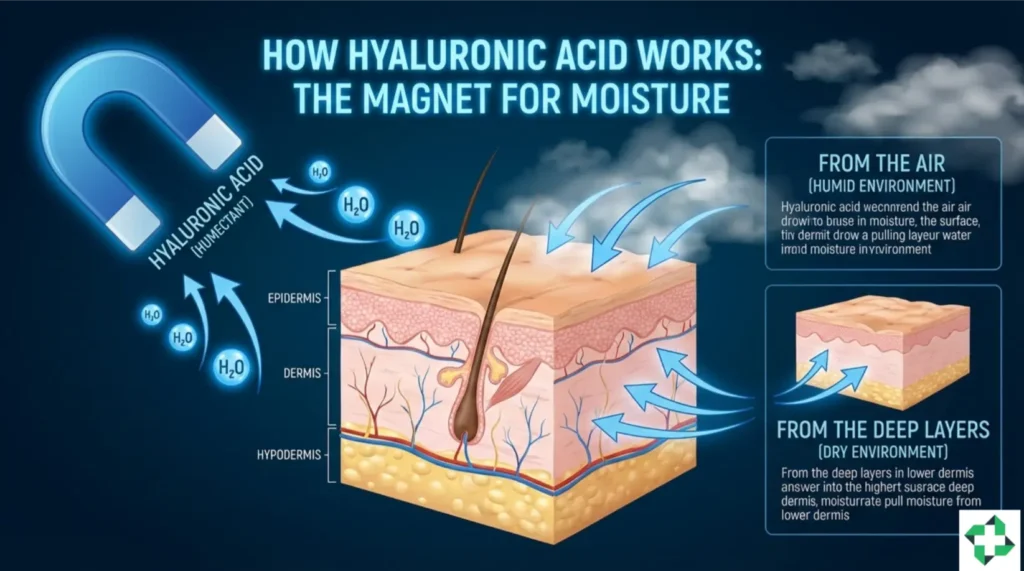
- From the Air: If you are in a humid environment, HA pulls moisture from the air into your dermis.
- From the Deep Layers: If you are in a dry environment, it can pull moisture from the deeper layers of your skin to the surface.
This is why “how” you apply it is just as important as the product itself—a detail we will cover in the usage section below.
The Major Benefits for Your Skin
Why is this ingredient found in everything from cleansers to creams? Because the benefits are immediate and universal:
1. Intense Hydration
It combats dehydration instantly. Whether your skin is oily or dry, dehydration (lack of water) makes skin look dull. Hyaluronic acid fixes this immediately.
2. Plumping and Anti-Aging
When your skin cells are full of water, they expand. This “plumping” effect helps to fill in fine lines and wrinkles, making them less visible. It is like filling a raisin with water until it becomes a grape again.
3. Strengthens the Lipid Barrier
A healthy moisture barrier is your skin’s defense against pollution and bacteria. By keeping the skin hydrated, this ingredient supports the barrier function, reducing sensitivity over time.
4. improved Texture
Hydrated skin is soft to the touch. Regular use eliminates rough patches and that uncomfortable “tight” feeling after cleansing.
5. Wound Healing
It helps regulate inflammation levels and signals the body to build more blood vessels in damaged areas.
Hyaluronic Acid Skincare Routine for Every Skin Type
One of the best things about hyaluronic acid is its versatility. It plays well with almost every other ingredient and suits every skin type. However, the way you use it should be tailored to your specific needs.
For Dry Skin
If your skin lacks oil, you need to trap the hydration.
- The Routine: Apply a thick hyaluronic acid serum on damp skin.
- Crucial Step: Immediately seal it in with a rich, occlusive moisturizer (containing shea butter or ceramides). If you don’t seal it, the air can actually suck the water back out of your skin, leaving you drier than before.
For Oily Skin
Oily skin can be dehydrated too! When oily skin lacks water, it overcompensates by producing more oil.
- The Routine: Look for a lightweight, water-based gel serum.
- Crucial Step: You don’t need a heavy cream. Follow up with a lightweight, oil-free moisturizer. This hydrates the skin without clogging pores.
For Sensitive Skin
Since it is a substance naturally found in the body, it is non-irritating and hypoallergenic.
- The Routine: Use a pure formula with minimal additives or fragrances.
- Crucial Step: It can be used to buffer more active ingredients. Apply it before Retinol to reduce irritation.
For Rosacea-Prone Skin
Rosacea often comes with a compromised skin barrier and heat sensation.
- The Routine: Store your serum in the fridge for a cooling effect.
- Crucial Step: The hydration helps cool the skin and reduce the flushing associated with rosacea flare-ups.
For Combination Skin
Crucial Step: Apply a heavier moisturizer over your dry cheeks and a lighter gel moisturizer over your oily T-zone.
The Routine: You can apply it all over the face.
How to Use It Correctly: The “Damp Skin” Rule
There is one golden rule that determines whether hyaluronic acid will make your skin glow or dry it out: Always apply it to damp skin.
Because it acts like a sponge, it needs water to hold onto. If you apply it to bone-dry skin in a dry climate (low humidity), the molecule has no moisture to grab from the air. So, it will do the next best thing: it will pull water out of the deeper layers of your skin and bring it to the surface, where it evaporates. This leaves your skin tighter and drier.
The Correct Steps:
- Cleanse your face.
- Leave your face slightly wet (or mist with a toner).
- Apply your serum while your face is still damp.
- Apply moisturizer immediately to “lock” that hydration in.
Your Before & After Routine
To maximize the “glow” factor, here is how to integrate HA into your 2025 routine:
The Morning “Glow” Routine:
- Cleanse.
- Vitamin C Serum.
- Hyaluronic Acid (on damp skin).
- Moisturizer.
- SPF 50.
The Evening “Repair” Routine:
- Double Cleanse.
- Prescription Retinoid or Salicylic Acid.
- Hyaluronic Acid.
- Barrier Cream with Ceramides.
Side Effects and Precautions
Hyaluronic acid is incredibly safe, but there are minor caveats:
- Dry Climate Effect: As mentioned, in very dry weather (0% humidity), it can dry out your skin if not sealed with a moisturizer.
- Low Molecular Weight Sensitivity: Very rarely, the “micro” versions of this molecule (which penetrate deep) can cause inflammation in hypersensitive skin. If you notice redness, switch to a “high molecular weight” formula.
- Allergic Reactions: While the acid itself is safe, check the preservative system in the product bottle, as that is usually the cause of any reaction.
Expert Tips for 2025
- The Layering Secret: Use your hyaluronic acid before your thicker serums. The hydration helps the other active ingredients (like Retinol) penetrate more effectively.
- Internal Hydration: No matter how much acid you apply topically, your skin won’t look “plump” if you aren’t drinking enough water. HA works from the inside out, too!
Conclusion
Hydration is not just about vanity; it is about health. When your skin is hydrated, it functions better, looks younger, and heals faster. Hyaluronic acid is the most efficient tool we have to achieve that deep, lasting hydration.
Whether you are battling winter dryness, oily shine, or the first signs of aging, this ingredient deserves a permanent spot on your bathroom shelf. Just remember the golden rule: damp skin is key.
For more deep dives into the ingredients that actually work, keep reading HealthPedia24.com. We are here to help you build a routine that makes sense for you.
Sources : National Institutes of Health ( What is Hyaluronic Acid ), Cleveland Clinic ( Benefits of hyaluronic acid ), Webmd ( side effects of Hyaluronic acid ).
Disclaimer
The content provided in this article, “Mastering Hyaluronic Acid : Science, Benefits And Side Effects [2026],” by HealthPedia24.com is for general informational and educational purposes only and is NOT a substitute for professional medical advice, diagnosis, or treatment. Always consult a qualified dermatologist or healthcare professional with any questions regarding a medical condition or new skincare regimen. HealthPedia24.com is not responsible for any individual adverse reactions resulting from the use of the information provided herein.
For more Information you can read our Privacy Policy and Terms & Coditions.
Frequently Asked Questions
What does hyaluronic acid do for skin?
It acts as a powerful hydrator. It draws moisture from the environment and deeper skin layers to the surface, plumping the skin, reducing the look of fine lines, and creating a healthy glow.
Which is better, vitamin C or hyaluronic acid?
They are apples and oranges. Vitamin C is an antioxidant that brightens dark spots and protects against sun damage. Hyaluronic acid is strictly for hydration. For the best routine, use Vitamin C first, followed by HA.
Is hyaluronic acid ok for daily use?
Yes, absolutely. In fact, it works best when used twice daily—morning and night—to maintain hydration levels.
What is the best time to apply hyaluronic acid?
It can be used at any time. In the morning, it helps wake up tired skin and preps it for makeup. At night, it helps replenish the moisture lost during the day while you sleep.
What are the side effects of hyaluronic acid?
Side effects are extremely rare. The most common issue is dryness if applied to dry skin without a moisturizer on top. Very sensitive skin types should patch-test to ensure they don’t react to the specific formulation.