
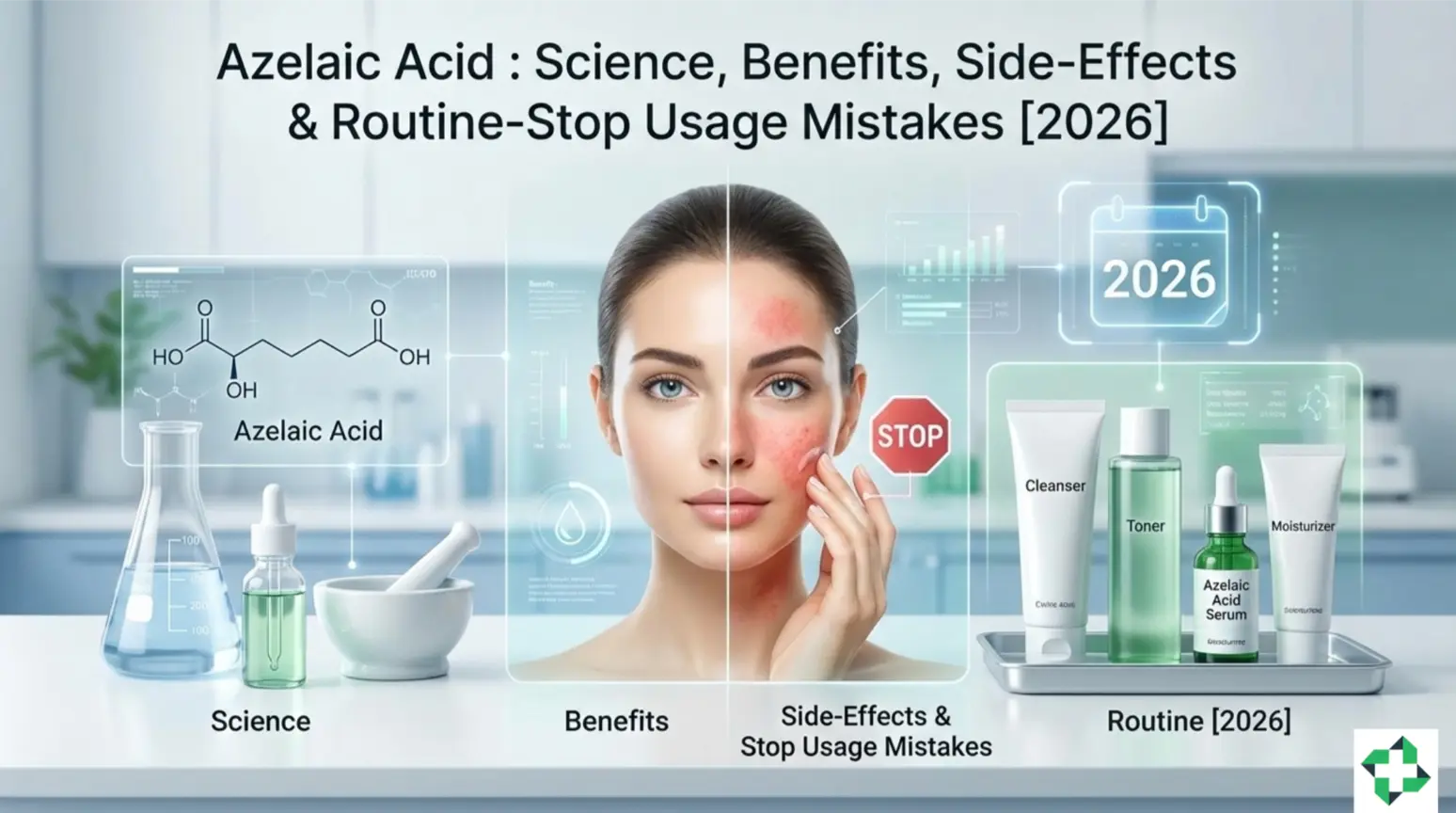
Have you ever felt like your skin is caught in a constant tug-of-war? Maybe you are dealing with stubborn breakouts on one hand and sensitive, red patches on the other. It feels like every product that fixes the acne makes the redness worse, and everything that soothes the redness clogs your pores. If this sounds familiar, you are about to meet your new best friend.
Welcome to HealthPedia24.com, where we help you navigate the complex world of dermatology with ease. Today, we are shining a spotlight on an ingredient that often gets overshadowed by giants like Retinol or Vitamin C, but deserves a permanent spot in your cabinet: Azelaic Acid. Whether you are fighting rosacea, dark spots, or adult acne, this multi-tasking molecule is the “quiet achiever” that actually delivers on its promises without the drama of irritation.
What is Azelaic Acid?
Despite the name, azelaic acid is not an Alpha Hydroxy Acid (AHA) like glycolic acid, nor is it a Beta Hydroxy Acid (BHA) like salicylic acid. It is a naturally occurring dicarboxylic acid.
It is found in grains like barley, wheat, and rye. Interestingly, it is also produced naturally by the yeast (Malassezia furfur) that lives on normal human skin. For skincare formulations, it is typically lab-engineered to ensure stability and effectiveness.
Unlike stronger acids that work primarily by aggressively exfoliating the surface, azelaic acid works by influencing cell behavior and calming the skin’s environment.
The Science: How It Works (The Triple Threat)
Azelaic acid is unique because it hits three major skin concerns via three different biological pathways.
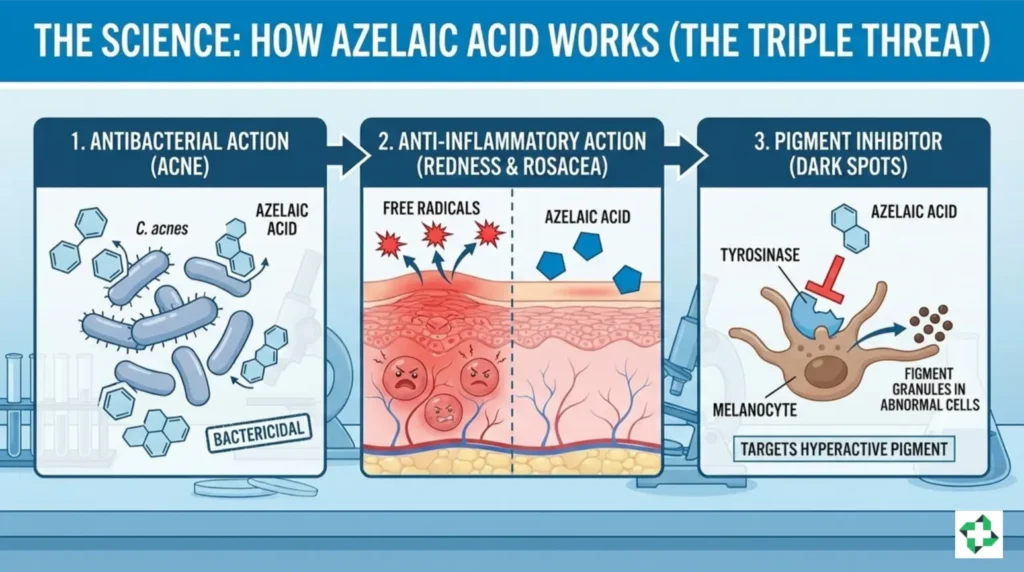
1. The Antibacterial Action (Acne)
It is bactericidal against Cutibacterium acnes (C. acnes), the bacteria responsible for inflammatory acne. Unlike antibiotics, bacteria do not develop resistance to azelaic acid over time, making it a great long-term solution.
2. The Anti-Inflammatory Action (Redness & Rosacea)
This is its superpower. Azelaic acid acts as a potent anti-inflammatory agent. It scavenges free radicals and reduces the cascade of inflammation that causes the bright red, angry papules associated with rosacea and inflammatory acne.
3. The Pigment Inhibitor (Dark Spots)
It is a tyrosinase inhibitor. This means it interferes with the enzyme responsible for producing melanin (pigment). Crucially, it preferentially targets abnormal, hyperactive pigment cells (like those in melasma or post-acne marks) while leaving normal pigment cells alone.
The Science-Backed Benefits of Azelaic Acid
The reason dermatologists love Azelaic Acid is that it tackles three of the most difficult skin concerns simultaneously.
1. The Ultimate Rosacea Treatment
Unlike Retinol, which can be too harsh for rosacea, this ingredient is the gold standard for reducing redness. it helps soothe the visible blood vessels and “bumps” (acne rosacea) that characterize this condition.
2. Clearing Acne and Clogged Pores
It is a “comedolytic,” meaning it prevents the buildup of dead skin cells that plug your pores. Because it is gentler than benzoyl peroxide, it is often preferred for people with sensitive, acne-prone skin.
3. Fading Hyperpigmentation
If you have dark marks left over after a pimple (Post-Inflammatory Hyperpigmentation or PIH), Azelaic Acid is incredibly effective. It selectively targets “hyperactive” pigment cells without bleaching the surrounding healthy skin.
Azelaic Acid Routines for Every Skin Type
Because this ingredient is so versatile, it can be adapted to almost any skin concern. Here is how you should incorporate it based on your specific needs:
For Sensitive and Rosacea-Prone Skin
This skin type needs a “slow and steady” approach.
- The Routine: Cleanse with a milky, non-foaming cleanser. Apply a thin layer of Azelaic Acid after your moisturizer. This “sandwich technique” buffers the acid and prevents the initial stinging sensation.
For Oily and Acne-Prone Skin
You want the acid to penetrate deeply into the pores.
- The Routine: Use a salicylic acid cleanser, followed by Azelaic Acid on dry skin. Follow up with a lightweight, oil-free gel moisturizer.
For Dry Skin
Dry skin can sometimes find acids a bit itchy.
- The Routine: Mix a pea-sized amount of the acid with your favorite hydrating serum or cream. Focus on areas with redness or dark spots.
For Combination Skin
- The Routine: Apply the acid primarily to your T-zone for pore control and to any specific areas of hyperpigmentation on the cheeks.
How to Use Correctly: The “Buffer” Method
Over-the-counter azelaic acid is usually found in 10% concentrations, while prescriptions go up to 15% or 20%.
- Cleanse: Wash your face with a gentle cleanser.
- Dry (Mostly): Unlike hyaluronic acid, you don’t need your skin damp. Let it dry until it’s just slightly tacky.
- Apply: Apply a pea-sized amount to the affected areas (or the whole face).
- Buffer (Optional): If you are new to it, apply your moisturizer first, let it sink in, and then apply the azelaic acid on top to slow down absorption and reduce tingling.
- Moisturize: Follow with a good barrier-repairing moisturizer, as azelaic acid can be slightly drying over time.
Side Effects and Precautions
While it is one of the gentlest acids available, Azelaic Acid is not without its quirks.
- The “Azelaic Itch”: For the first few minutes after application, many users feel a tingling or itching sensation. This is normal and usually stops after 10–15 minutes. It typically goes away entirely after 2 weeks of consistent use.
- Dryness/Flaking: If you use a high percentage (like 15% or 20% prescription strength), you might notice some mild peeling.
- Initial Redness: Occasionally, the skin might look slightly flushed immediately after application before the anti-inflammatory effects kick in.
Your Before & After Routine
Here is how to integrate it into a 2026 routine without overwhelming your skin:
The Morning “Calm & Protect” Routine:
- Gentle Cleanser.
- Vitamin C Serum (optional, if tolerated).
- Azelaic Acid (10%).
- Moisturizer.
- SPF 50 (Crucial when treating pigment).
The Evening “Treat & Repair” Routine:
- Double Cleanse.
- Hydrating Toner or Serum (Hyaluronic Acid).
- Azelaic Acid (10-15%).
- Niacinamide Moisturizer (Niacinamide pairs beautifully with Azelaic Acid to calm redness).
Expert Tips for 2026
- The Power Couple: Pair azelaic acid with Niacinamide. They work synergistically to calm inflammation and improve barrier function. Many products now combine these two in one formula.
- Don’t Mix with Strong Actives Initially: When starting, skip your strong AHA/BHA exfoliants or high-strength retinoids on the same night to avoid excessive irritation. Once adjusted, they can sometimes be used together or on alternate nights.
- Be Patient: Hyperpigmentation takes time to fade. You will likely see redness improve in 2-4 weeks, but dark spots may take 3 months of daily use to show significant change.
- Check the Percentage: Over-the-counter products usually contain 10%. Prescription strengths (Finacea or Azelex) are 15%–20%. If 10% isn’t working after two months, consult a dermatologist for a higher dose.
Conclusion
Dealing with skin issues can feel like a cruel joke—you are already stressed, and now you have to deal with itchy, irritated skin, which only makes you more stressed. It is a cycle, but it is one you can break by choosing the right, supportive ingredients.
Azelaic Acid is a rare ingredient that respects your skin barrier while still being powerful enough to treat serious concerns like acne and rosacea. By recognizing the signs of inflammation early and treating your skin with gentle care, you can manage your symptoms effectively and restore your glow.
Remember, clear skin starts with a calm mind and a consistent routine. For more insights into the connection between your health and your lifestyle, keep exploring HealthPedia24.com.
Sources : Banner Health ( What is Azelaic Acid? ), National Institutes of Health ( Science Behind Azelaic Acid ), WebMd ( Benefits of Azelaic Acid ), Mayo Clinic ( Side Effects and Precautions ).
Disclaimer
The content provided in this article, “Azelaic Acid : Science, Benefits, Side-Effects & Routine-Stop Usage Mistakes [2026],” by HealthPedia24.com is for general informational and educational purposes only and is NOT a substitute for professional medical advice, diagnosis, or treatment. Skin rashes and chronic redness can be symptoms of various underlying conditions, including infections or autoimmune diseases. Always consult a qualified dermatologist or healthcare professional with any questions regarding a medical condition. If you experience severe swelling or an allergic reaction, seek emergency medical attention immediately. HealthPedia24.com is not responsible for any individual adverse reactions resulting from the use of the information provided herein.
For more Information you can read our Privacy Policy and Terms & Conditions.
Frequently Asked Questions
What does azelaic acid do for my skin?
It acts as a multi-functional treatment that kills acne bacteria, reduces inflammation (redness), and fades dark spots by stopping the overproduction of pigment. It also helps refine skin texture by gently preventing pore clogs.
Is azelaic acid the same as retinol?
No. Retinol is a Vitamin A derivative that focuses on cell turnover and collagen production. Azelaic Acid focuses on calming inflammation, killing bacteria, and targeting pigment. They can be used in the same routine, but they serve very different purposes.
Is it okay to use azelaic acid every day?
Yes, most people can use it once or twice daily. In fact, consistency is key to seeing results for rosacea and hyperpigmentation. However, if you have very sensitive skin, start with once every other day.
What are the side effects of azelaic acid?
The most common side effects are temporary stinging, itching, or tingling immediately after application. Some users may also experience mild dryness or redness during the first week of use.
What are the mistakes with azelaic acid?
The biggest mistakes are applying it to damp skin (which causes intense stinging) and using too much product at once. Another mistake is expecting instant results for dark spots; hyperpigmentation requires at least 8-12 weeks of consistent use.