
We have all had those mornings where we look in the mirror and feel like our skin looks a bit “blah”—dull, tired, and lacking that natural glow. If you have been searching for a way to hit the reset button on your complexion, you have likely come across one specific ingredient more than any other. It is the gold standard of exfoliation, and today at HealthPedia24.com, we are diving deep into everything you need to know about it.
Glycolic Acid is often called the “holy grail” for exfoliation, and for good reason. Whether you are dealing with fine lines, stubborn sun tan, or rough texture, this powerful Alpha Hydroxy Acid (AHA) is designed to transform the surface of your skin. But because it is so powerful, using it correctly is the difference between a radiant glow and a damaged skin barrier. Let’s break down the science, the benefits, and the perfect routine for your skin type.
What is Glycolic Acid? (The Chemistry)
Glycolic Acid is a naturally occurring Alpha Hydroxy Acid derived primarily from sugarcane. What sets it apart from other acids, like Lactic or Mandelic acid, is its molecular structure.
The Smallest Molecule Advantage
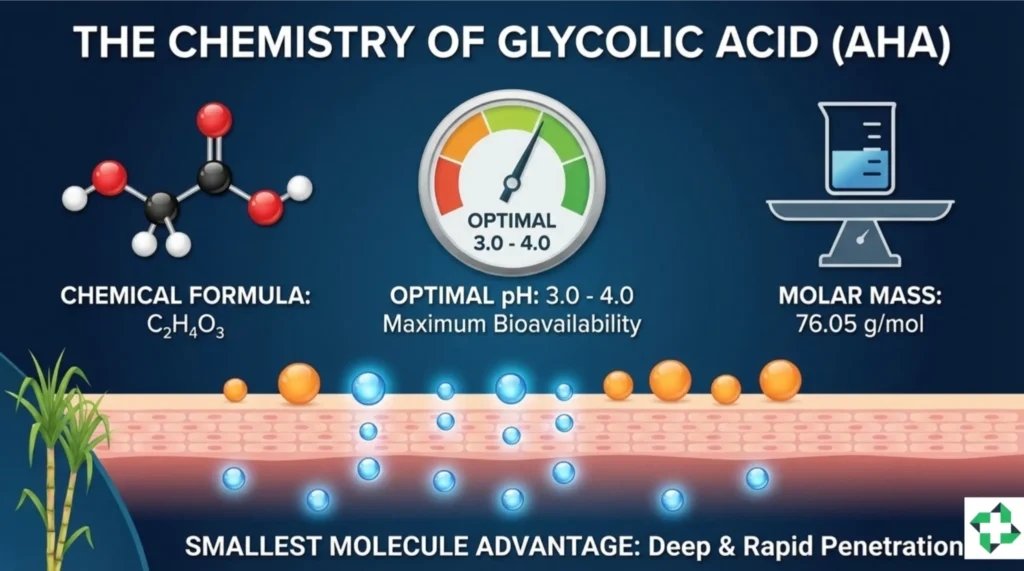
Glycolic acid has the smallest molecular size of all AHAs. Its chemical formula is C2H4O3. Because it is so small, it has the unique ability to penetrate the skin’s surface more deeply and rapidly than any other acid in its class.
Bioavailability: It works best at a low pH (between 3.0 and 4.0). If a product’s pH is too high, the acid becomes neutralized and loses its exfoliating power.
Molar Mass: Approximately 76.05g/mol.
Solubility: Highly water-soluble.
Mechanism of Action: How It Works
To understand how glycolic acid transforms your skin, we have to look at how skin cells stay attached to one another.
Our skin cells are held together by “glue-like” proteins called desmosomes. As we age, or due to environmental damage, the natural shedding process (desquamation) slows down. This leads to a buildup of dead skin cells, resulting in a dull, flaky, and rough complexion.
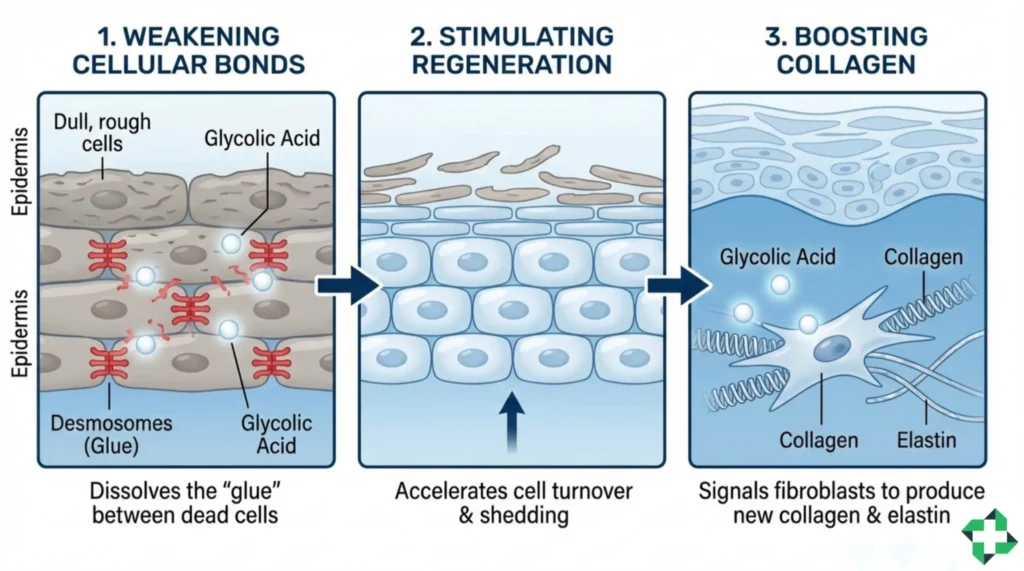
Glycolic acid works by:
- Weakening Cellular Bonds: It dissolves the desmosomes (the glue), allowing dead skin cells to be easily swept away.
- Stimulating Regeneration: By removing the top layer of dead skin, it signals the deeper layers to accelerate cell turnover and produce fresh, healthy cells.
- Boosting Collagen: Research shows that glycolic acid reaches the dermis to stimulate fibroblasts, the cells responsible for producing collagen and elastin.
The Major Benefits of Using Glycolic Acid
Why should you make room for this ingredient in your vanity? Here are the primary reasons it remains a dermatologist favorite:
1. Intense Brightening and Glow
By removing the “gray” layer of dead skin, it instantly reflects light better. This is why many people notice an immediate “glass skin” effect after a professional peel or a high-quality home toner.
2. Anti-Aging and Fine Lines
Unlike some exfoliants that only work on the surface, Glycolic Acid has been shown to stimulate fibroblasts in the dermis to produce more collagen. With consistent use, it can help plump up fine lines and improve skin elasticity.
3. Fading Hyperpigmentation and Sun Damage
If you are struggling with dark spots, melasma, or an uneven skin tone, this acid is a powerhouse. It physically removes the pigmented cells on the surface while encouraging faster cell turnover, which brings fresh, un-pigmented cells to the top.
4. Refining Pore Size and Texture
While BHA (Salicylic Acid) is better for deep oil, Glycolic Acid is excellent at clearing the “gunk” around the pore opening, making pores look smaller and the skin surface feel incredibly smooth.
Concentration and pH: Choosing the Right Product
For AdSense approval and user trust, it is vital to explain that the percentage on the bottle isn’t the only factor. The Free Acid Value depends on the pH.
- Beginner Level (5% – 8%): Ideal for daily or every-other-day use. These concentrations provide gentle exfoliation with low risk of irritation.
- Advanced Level (10% – 15%): Found in weekly “resurfacing” masks or toners. These should be used with caution and not combined with other strong actives.
- Professional Level (30% – 70%): These are in-office chemical peels performed by professionals. Never attempt these at home, as they can cause severe chemical burns.
Comparison Table: AHA vs. BHA vs. PHA
To help you decide if Glycolic Acid is right for you, compare it to other popular exfoliating acids:
| Feature | Glycolic Acid (AHA) | Salicylic Acid (BHA) | Gluconolactone (PHA) |
| Molecule Size | Very Small (Deep) | Medium | Large (Surface) |
| Best For | Anti-aging & Texture | Acne & Oily Skin | Ultra-Sensitive Skin |
| Skin Type | Normal, Combo, Dry | Oily, Acne-Prone | Sensitive, Rosacea |
| Key Benefit | Glow & Collagen | Deep Pore Cleansing | Hydration & Mild Peel |
Stop These Common Usage Mistakes
The most common reason people “fail” with glycolic acid is improper application. Avoid these 2026 skincare pitfalls:
- Applying to Damp Skin: Water can increase the penetration speed of glycolic acid, making it hit your skin too hard and causing a burn. Always apply to bone-dry skin.
- Skipping Sunscreen: Glycolic acid makes your skin highly photosensitive. Using it at night without wearing SPF 50 the next day will result in more sun damage and dark spots.
- Over-Exfoliating: Using a 10% toner every single night will eventually strip your skin barrier, leading to redness, stinging, and “plastic-looking” shiny skin.
- Mixing with Retinol: Do not use Glycolic Acid and Retinol in the same evening routine. The combination is too aggressive for most skin barriers.
Tailoring the Routine: Glycolic Acid for Your Skin Type
At HealthPedia24.com, we believe skincare isn’t one-size-fits-all. Here is how to incorporate this acid based on your unique skin needs:
For Oily and Acne-Prone Skin
You can handle higher concentrations (8-10%) and more frequent use.
- The Routine: Use a Glycolic Acid toner 3 times a week after cleansing. It helps keep your pores clear and prevents the “dead skin plug” that starts an acne cycle.
For Dry Skin
Dry skin needs the humectant properties of this acid, but without the irritation.
- The Routine: Opt for a creamy cleanser containing the acid or a low-strength (5%) serum. Always follow up with a rich, ceramide-heavy moisturizer to lock in hydration.
For Combination Skin
- The Routine: Use the “Zone Method.” Apply your acid toner primarily to the T-zone (forehead, nose, chin) and use it sparingly on the drier cheek areas.
For Sensitive Skin and Rosacea
Caution is key here. Glycolic Acid might be too intense for active rosacea.
- The Routine: Consider a “wash-off” treatment. Use a cleanser with the acid, leave it on for 30 seconds, and rinse. This gives you the benefits with minimal contact time. Alternatively, stick to a much gentler acid like Lactic Acid.
How to Use Glycolic Acid Correctly: Step-by-Step
Don’t just slap it on! Follow these rules for the best results:
- Patch Test: Always test the product behind your ear for 24 hours before applying it to your whole face.
- Start Slow: Begin with once or twice a week. Let your skin build “acid tolerance” before moving to every other night.
- Night Use Only: It is best used in the PM routine to avoid immediate sun exposure.
- Dry Face: Just like Azelaic Acid, apply Glycolic Acid to dry skin. Applying it to wet skin can cause it to absorb too quickly, increasing irritation.
- Don’t Mix with Actives: Avoid using it in the same session as Retinol or Vitamin C. Use them on alternate nights to avoid “frying” your skin barrier.
The 2026 Glycolic Acid Routine
Follow this structured approach to integrate glycolic acid without irritation:
The AM Routine (The Protection Phase):
- Cleanse: Rinse with water or a gentle wash.
- Hydrate: Use a Hyaluronic Acid serum.
- Protect: Apply a broad-spectrum SPF 50. This is non-negotiable.
The PM Routine (The Exfoliation Night):
- Cleanse: Use a pH-balanced, non-stripping cleanser.
- Dry: Pat your face completely dry with a clean towel.
- Treat: Apply your glycolic acid serum or toner (Start 1x per week).
- Wait: Give it 3–5 minutes to self-neutralize on the skin.
- Nourish: Apply a rich moisturizer containing Ceramides or Squalane to support the barrier.
Side Effects and Important Precautions
Because Glycolic Acid penetrates so deeply, it can be spicy! It is important to be aware of the following:
- Photosensitivity: This is non-negotiable. It makes your skin more sensitive to the sun. If you use this acid at night but skip sunscreen the next day, you will likely end up with more sun damage than you started with.
- The “Tingle”: A mild stinging or tingling sensation is normal during the first few applications. However, if your skin feels like it’s burning or turns bright red, wash it off immediately.
- Purging: Sometimes, as it speeds up cell turnover, it can bring underlying congestion to the surface. This “purge” should last no more than 4 weeks.
- Dryness: Overuse can strip the skin of its natural oils, leading to flaking and a tight sensation.
Expert Tips for Maximum Results
- Body Care: Don’t stop at your face! Glycolic Acid is amazing for “Strawberry Legs” (Keratosis Pilaris) and rough elbows.
- The Sandwich Method: If your skin is sensitive, apply moisturizer first, then the acid, then moisturizer again.
- Watch the pH: An acid product only works if the pH is between 3.0 and 4.0. If the pH is too high, the acid becomes neutralized and won’t exfoliate.
Conclusion
Glycolic Acid is a powerhouse that truly earns its reputation. It is one of the few ingredients that can offer both instant gratification (that immediate glow) and long-term anti-aging benefits. However, with great power comes great responsibility. Respect the strength of the acid, never skip your sunscreen, and always listen to your skin.
If you treat it well, your skin will reward you with a clarity and brightness you didn’t think was possible. For more science-backed skincare deep dives, stay tuned to HealthPedia24.com.
Sources : PubChem NIH ( Glycolic Acid Chemistry ), Cleveland Clinic ( Benefits of Glycolic Acid and How To use ), WebMd ( Side Effects and Precautions )
Disclaimer
The content provided in this article, “Glycolic Acid 2026: The Ultimate Guide to Radiant Skin & Smooth Texture,” by HealthPedia24.com is for general informational and educational purposes only and is NOT a substitute for professional medical advice, diagnosis, or treatment. Skin rashes and chronic redness can be symptoms of various underlying conditions, including infections or autoimmune diseases. Always consult a qualified dermatologist or healthcare professional with any questions regarding a medical condition. If you experience severe swelling or an allergic reaction, seek emergency medical attention immediately. HealthPedia24.com is not responsible for any individual adverse reactions resulting from the use of the information provided herein.
For more Information you can read our Privacy Policy and Terms & Conditions.
Frequently Asked Questions
Does glycolic acid remove tan?
Yes, it is very effective for removing a sun tan. Because it exfoliates the surface layer of tanned (damaged) skin cells, it reveals your natural skin tone underneath. However, it won’t prevent a future tan—only sunscreen can do that.
What are the disadvantages of glycolic acid on skin?
The main disadvantages include potential irritation, redness, and increased sun sensitivity. If overused, it can lead to a “shiny,” thin-looking skin surface which is a sign of an over-exfoliated and damaged barrier.
Which is better, salicylic acid or glycolic acid?
It depends on your goal! If you have blackheads and oily skin, Salicylic Acid is better because it is oil-soluble. If you want to treat aging, sun damage, and surface texture, Glycolic Acid is the winner. Many people use both on alternate nights.
Can I apply glycolic acid every day?
For most people, every day is too much. 2–3 times a week is usually the “sweet spot.” Only those with very oily, resilient skin should consider daily use, and even then, they should monitor for signs of irritation.
How many days does glycolic acid take to work?
You will feel the smoothness after just one use. For brightening and “glow,” it takes about 2 weeks. For fading dark spots and fine lines, you need to be consistent for 8–12 weeks.