
![Fix Open and Large Pores Naturally [2025] featured image illustrating 5 habits like ice therapy and sugar detox](https://healthpedia24.com/wp-content/uploads/2025/12/fix-open-and-large-pores-naturally-.webp)
Welcome to HealthPedia24.com, where we believe that great skin often starts with great habits, not just expensive bottles.
One of the most common complaints we hear is: “My pores look huge! How do I close them?” If you have ever looked in a magnifying mirror and felt like your skin resembles an orange peel, you are not alone. Large pores are a universal concern, affecting everyone from teenagers to those in their 50s.
The beauty industry will try to sell you countless primers, toners, and blur creams to fix this. But the truth is, some of the most effective ways to manage pore size don’t cost a penny. They require a change in lifestyle, diet, and hygiene habits.
In this guide, we are going to skip the product recommendations and dive deep into the biology of your skin. We will explore how to minimize large skin pores using science, temperature, and daily habits and we are going to explore why open pores happen, how to manage them based on your specific skin type, and the ingredients that actually make a visible difference.
The Truth: Can Pores Actually “Close”?
Before we fix the problem, we must debunk the biggest myth in skincare. Pores are not doors. They do not have muscles that allow them to open and close.
A pore is simply the opening of a hair follicle. It serves a vital purpose: it releases sebum (oil) to keep your skin hydrated and sweat to regulate your body temperature. You cannot get rid of them, and you wouldn’t want to!
However, you can minimize their appearance. When a pore is clogged with oil and dirt, it stretches out, looking larger and darker. When the skin around the pore loses elasticity, the pore sags and looks bigger. Our goal is to keep them clean and tight so they remain invisible to the naked eye.
Why Do Pores Look Large? (The Main Causes)
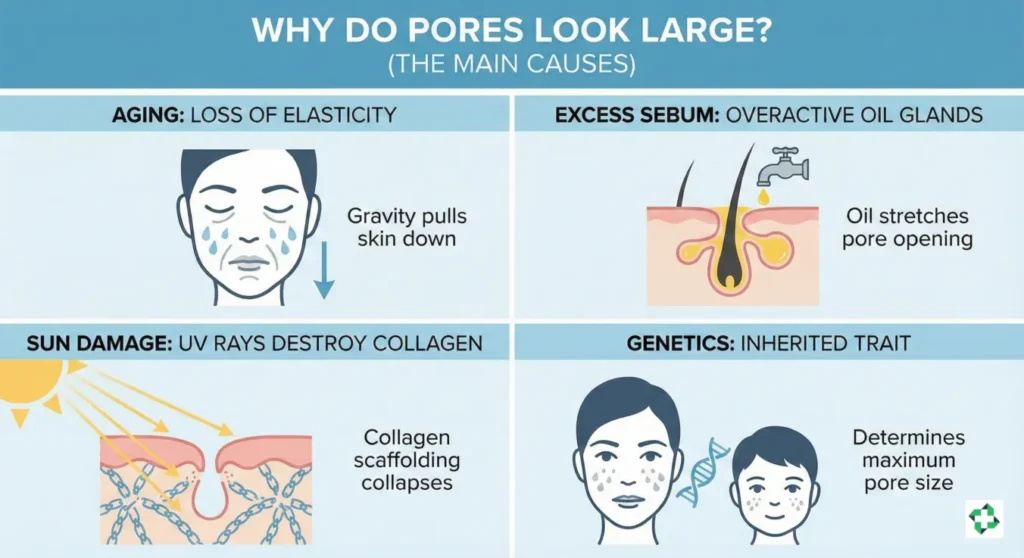
To treat the issue effectively without products, you need to know what is causing it.
Aging: As we age, skin loses elasticity, causing gravity to pull the skin down, making pores look like teardrops.n pores, we are actually talking about cleaning them out and firming the skin around them so they appear tighter and smaller.
Excess Sebum: If your oil glands are overactive, the oil rushes to the surface, physically stretching the pore opening.
Sun Damage: UV rays destroy collagen. Collagen is the “scaffolding” that holds your pores tight. Without it, the pore walls collapse and sag.
Genetics: If your parents have large pores, you likely will too. This determines your maximum pore size.
Treating Open and Large Pores by Skin Type
A heavy clay mask might work wonders for an oily teenager but could destroy the barrier of someone with rosacea. Here is how to tackle open and large pores based on your unique skin profile.
1. For Oily Skin
This is the most common skin type associated with large pores. The excess sebum acts like a filler, keeping the pore stretched.
- The Strategy: Deep cleaning and oil control.
- Hero Ingredient: Salicylic Acid (BHA). It is oil-soluble, meaning it dives inside the pore to dissolve the gunk.
2. For Dry Skin
It sounds contradictory, but dry skin can have large pores too. When skin is dehydrated, the cells shrivel up, creating gaps that make pores look more prominent.
- The Strategy: Intense hydration to “plump” the skin cells surrounding the pore.
- Hero Ingredient: Hyaluronic Acid and Lactic Acid (a gentle exfoliator that also hydrates).
3. For Sensitive Skin & Rosacea
Aggressive scrubbing will only inflame the skin, making open pores look even bigger due to swelling and redness.
- The Strategy: Calming inflammation and strengthening the barrier.
- Hero Ingredient: Niacinamide (Vitamin B3). It regulates oil without irritation and calms redness.
4. For Combination Skin
You likely have open and large pores on your nose and forehead (T-Zone) but dry cheeks.
- The Strategy: “Multi-zoning.” Treat the T-zone with BHAs and the cheeks with hydration.
Effective Natural Solutions or Habits to Minimize Pores
Here are the best lifestyle changes and natural techniques to refine your skin texture without buying a single serum.
1. Ice Therapy (Cryotherapy)
This is the oldest trick in the book, and it works on the principle of vasoconstriction.
- The Science: Cold temperatures cause the blood vessels and the skin tissue to contract (tighten) temporarily. This gives the skin a firm, smooth appearance.
- How to Do It: Wrap an ice cube in a thin cotton cloth (never apply ice directly to the skin to avoid ice burns). Gently massage it over your T-zone for 15–30 seconds.
- Best Time: Do this in the morning to depuff your face and tighten the skin texture for the day.
2. The “Sugar Detox” (Dietary Control)
What you eat shows up on your face. There is a direct link between high-glycemic foods and pore size.
- The Science: Foods high in sugar and refined carbs (white bread, pasta, sweets) spike your insulin levels. Insulin triggers your sebaceous glands to produce more oil. More oil = larger pores.
- The Solution: Reduce your sugar intake for 2 weeks. Focus on foods rich in Vitamin A (like sweet potatoes and carrots) and Omega-3s (walnuts, flaxseeds), which help regulate oil production naturally.
3. Change Your Pillowcase Hygiene
You might be cleaning your face, but are you cleaning where your face sleeps?
- The Problem: Your pillowcase collects sweat, saliva, dead skin cells, and hair oil every single night. If you sleep on it for a week, you are essentially rubbing your clean face into a petri dish of bacteria for 8 hours. This causes inflammation, keeping pores clogged and enlarged.
- The Fix: Change your pillowcase every 3 to 4 days. If possible, switch to a silk or satin pillowcase, which creates less friction and absorbs less moisture than cotton.
4. Manage Stress (Cortisol Control)
Stress isn’t just a mental feeling; it’s a hormonal event.
- The Science: When you are stressed, your body produces cortisol. Cortisol signals your skin to produce more sebum. This is why people often break out or get greasy skin before a big exam or event.
- The Solution: Practice breathing exercises or meditation. Lowering cortisol levels naturally lowers oil production, keeping pores from stretching.
5. Steam and Sweat (But Do It Right!)
Sweating is one of the body’s natural detox mechanisms, but it is a double-edged sword.
- The Method: Exercise or safe steam can help soften the hardened oil (sebum plugs) inside the pores.
- The Critical Step: You must wash your face with cool water immediately after sweating. If you let sweat dry on your face, the salts and waste products will settle back into the pores, clogging them worse than before.
Bad Habits That Make Pores Look Bigger
Sometimes, how to minimize large skin pores isn’t about what you start doing, but what you stop doing.
Using Hot Water
Washing your face with hot water strips away all natural oils. Your skin panics and thinks it is dry, so it overcompensates by producing even more oil. This leads to a greasy face and wider pores within hours.
- Correction: Always use lukewarm or cool water.
Touching Your Face
Your hands are covered in natural oils and bacteria from your phone, door handles, and keyboard. Every time you touch your face, you transfer this grime directly into your pores.
Sleeping with Makeup
This is the cardinal sin of skincare. Makeup mixes with the oil and dirt accumulated during the day, settling deep into the pore lining and physically stretching it overnight.
DIY Myths: What NOT To Do
Since we are looking for non-product solutions, you might be tempted to raid your kitchen. Be careful. Some DIY hacks do more harm than good.
- Baking Soda: Never use this. It is highly alkaline (High pH) and destroys your skin’s acid mantle, leading to bacteria growth and irritation.
- Toothpaste: It contains drying agents that can burn the skin and cause dark spots.
- Raw Lemon Juice: It is too acidic and makes your skin sensitive to the sun, leading to more sun damage (which destroys collagen and widens pores!).
Some Expert Tips for Pore Maintenance
At HealthPedia24.com, we recommend focusing on “Texture Management.”
- Hydrate: It sounds contradictory, but drinking enough water keeps skin cells plump. When cells are plump, they squeeze together, making the gaps (pores) between them look smaller.
- Clean Your Phone Screen: You press your phone against your cheek multiple times a day. Disinfect your screen daily to stop bacterial transfer.
- Sun Protection (Physical): Since we aren’t discussing products, use physical protection. Wear wide-brimmed hats or use an umbrella. Stopping UV damage prevents collagen breakdown, keeping pore walls tight.
Also Visit:
Hydration and Moisture: Do You Need Both? [2025]Ingredient Checklist: What to Look For
To build an effective routine, you need to know which ingredients are your friends and which are your enemies.
The Good Ingredients (Pore Minimizers)
- Niacinamide: This is the gold standard. It normalizes pore lining specifically to stop oil from getting backed up.
- Retinol/Retinoids: Over time, these build collagen. More collagen means tighter skin, which tightens the look of open pores.
- Salicylic Acid (BHA): The best unclogging agent available.
- Clay (Kaolin or Bentonite): Acts as a magnet to draw out excess oil temporarily.
Ingredients to Avoid
- Comedogenic Oils: Coconut oil and Cocoa Butter are too heavy and will clog the pores, making them larger.
- High Alcohol: Denatured alcohol dries out the skin. Your skin might panic and produce more oil to compensate, worsening the issue.
- Shimmery Makeup: While not a skincare ingredient, high-shimmer highlighters emphasize texture. Stick to matte formulas over areas with open pores.
How to Use Treatments Correctly: The Routine
You cannot just slap on a pore minimizer and hope for the best. Layering matters.
The “Before & After” Routine
Step 1: The Cleanse (PM) Use the Double Cleansing method. Start with an oil cleanser to melt the sebum plugs, followed by a gentle water-based wash. This is critical for emptying the pore.
Step 2: Exfoliate (PM – 2/3 times a week) Apply a liquid BHA exfoliant. Let it sit for 10-15 minutes. This clears the path.
Step 3: Treat (AM/PM)
- Morning: Apply a Niacinamide serum. This tightens the look of pores throughout the day.
- Evening: Apply Retinol. This works on the structural integrity of the pore walls.
Step 4: Moisturize (AM/PM) Use a lightweight, non-comedogenic moisturizer. If you skip this, your skin may dehydrate and make open & large pores look more obvious.
Step 5: Sunscreen (AM – Mandatory) Sun damage destroys collagen. Loss of collagen leads to sagging pores. SPF is your best preventative tool.
Side Effects and Precautions
When attacking pore size, it is easy to go overboard.
- Over-Exfoliation: Using scrubs or acids every day can strip the moisture barrier. This leads to “shiny” but textured skin that looks waxy and inflamed.
- The “Purge”: When you start Salicylic Acid or Retinol, you might see more breakouts initially. This is the gunk coming to the surface. Stick with it for 4-6 weeks.
- Dryness: If treating open pores creates dry patches, reduce the frequency of your active ingredients or buffer them with moisturizer.
Conclusion
You don’t always need a 10-step routine to improve your skin texture. Learning how to minimize large pores of your skin is largely about controlling oil production through diet, protecting collagen from sun damage, and maintaining strict hygiene.
Remember, pores are a natural part of human skin. You cannot erase them, and “glass skin” photos on social media are often filtered. However, by avoiding hot water, reducing sugar, and using simple techniques like ice therapy, you can keep your pores clean, tight, and barely visible.
Start these lifestyle changes today, and your skin will thank you.
For more science-backed skincare advice, stay tuned to HealthPedia24.com.
Sources : American Academy of Dermatology ( Treat large pores ), Cleveland Clinic ( Retinol Using ), National Institute of Health ( Role of Diet ), Mayo Clinic ( Face Washing ), Healthline ( Stress & Cortisol ).
Important Disclaimer
The content provided in this article, “Fix Open and Large Pores Naturally – 5 Effective Habits [2025],” by HealthPedia24.com is for general informational and educational purposes only and is NOT a substitute for professional medical advice, diagnosis, or treatment.
Always consult a qualified dermatologist or healthcare professional with any questions regarding a medical condition, severe acne scarring, or before starting any new potent skincare regimen like retinoids. We recommend performing a patch test on your inner arm 24 hours before using any new product. HealthPedia24.com is not responsible for any individual adverse reactions resulting from the use of the information provided herein.
For more Information you can read our Privacy Policy and Terms & Conditions.
Frequently Asked Questions
Which vitamin deficiency causes open pores?
A deficiency in Vitamin A and Vitamin C can contribute to the problem. Vitamin A controls oil production and cell turnover, while Vitamin C is crucial for collagen synthesis. Without enough of these, skin becomes sluggish and loose, leading to larger-looking open pores.
Does Vitamin C shrink pores?
Indirectly, yes. Vitamin C is a powerful antioxidant that boosts collagen production and protects elastin. By keeping the skin firm and preventing sun damage, it prevents the pores from stretching out and sagging.
How can I reduce my open pores naturally?
Keep your skin cool and clean. Using clay masks (natural earth) weekly helps absorb oil. Using Aloe Vera gel can also hydrate the skin without clogging, keeping the texture plump and minimizing the appearance of pores.
How to fix a large open pore?
If you have a single, very large pore that looks like a hole, it might be an “ice pick scar” or a permanently dilated pore. Skincare (Retinoids) can help slightly, but the most effective fix is a professional treatment like TCA Cross or laser therapy.
Can I use baking soda to scrub pores?
No! Baking soda is highly alkaline and destroys your skin’s acidic barrier. This leads to bacteria growth, moisture loss, and eventually, more inflamed open & large pores. Stick to formulated exfoliants like BHA.