
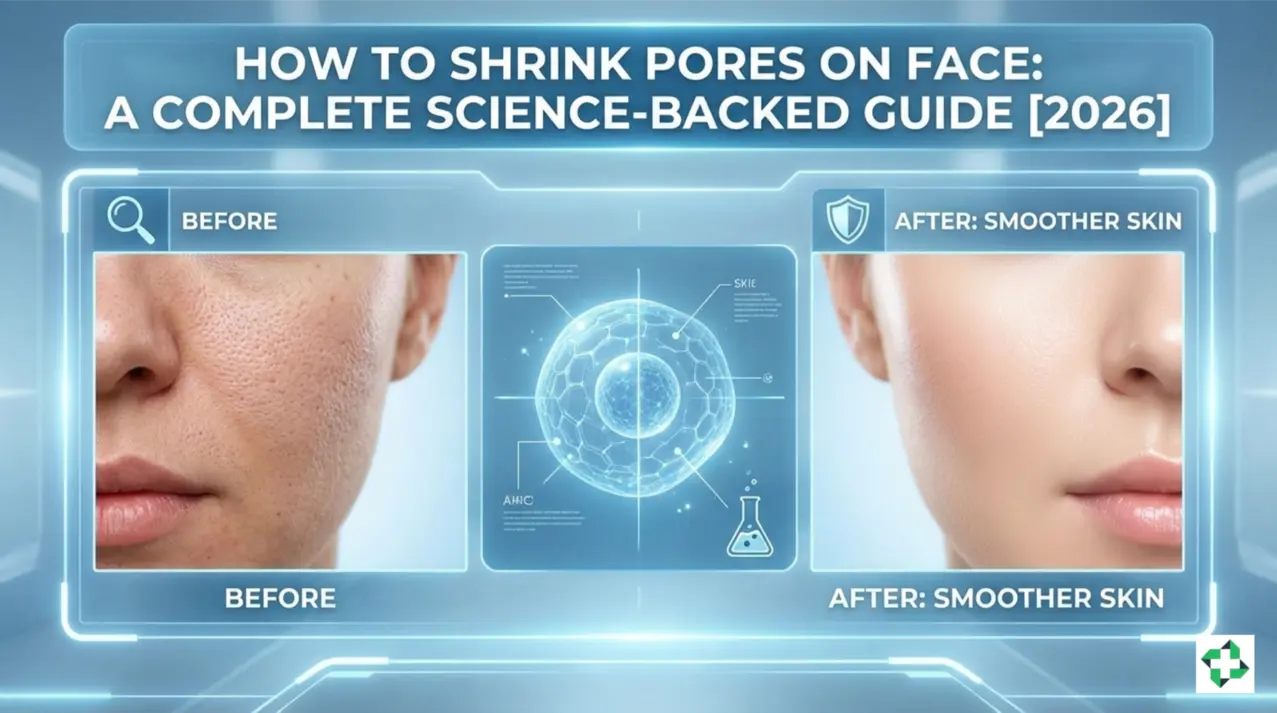
Healthy, even-textured skin is something many people strive for, yet visible pores often become a major concern—especially as we grow older or deal with oily or acne-prone skin. If you’ve ever looked closely in the mirror and wondered how to shrink pores on face, you’re not alone. Enlarged or visible pores are one of the most searched skincare topics worldwide.
At healthpedia24.com, our goal is to break down skincare science in a clear, honest, and practical way. This article explores pores in depth—what they are, why they appear larger, and how you can minimize pores on face safely and realistically, without exaggerated promises or misleading claims. So, we are going to help you navigate skincare topics like how to shrink pores on face with reliable information. Pores are natural openings on the skin that allow oil and sweat to reach the surface, but when they appear enlarged, it can affect skin texture and confidence.
This guide explores the factors influencing pore size, potential strategies to address them, and habits that may support smoother-looking skin—all drawn from scientific research. We’ll cover genetics, environmental influences, and routines without making definitive claims, as individual results vary. Remember, this is for informational purposes; consult a dermatologist for personalized advice.
Understanding how to shrink pores on face starts with recognizing that pores don’t actually “shrink” permanently but can appear minimized through proper care. Factors like excess sebum, dead skin buildup, and aging contribute to their visibility, particularly in areas like the T-zone. By focusing on gentle practices and evidence-based approaches, you can explore ways to refine your skin’s appearance naturally.
Understanding Pores on Face: What They Really Are
Pores are tiny openings on the skin that allow sweat and oil (sebum) to reach the surface. Every pore is connected to a hair follicle and a sebaceous gland. These openings are essential for healthy skin function, temperature regulation, and maintaining the skin barrier.
It’s important to understand one key fact early on:
Pores cannot physically open or close.
What we perceive as “open pores on face” or “big pores on face” is actually the result of changes around the pore—such as oil buildup, loss of skin elasticity, or debris inside the pore making it appear larger.
What Causes Enlarged Pores on Face?
Enlarged pores on face often result from a combination of genetic and environmental factors. Genetically, some people are predisposed to larger pores due to skin type—oily or combination skin tends to show more prominent pores because of higher sebum production. Open pores on face reason can include hormonal changes, such as during puberty or menstrual cycles, which increase oil output and stretch pore walls.
Environmental elements play a role too. Sun exposure breaks down collagen, making pores appear bigger over time. Pollution and dirt can lead to clogged pores on face, where debris mixes with oil to form blackheads or whiteheads, exaggerating size. Aging naturally reduces elasticity, causing big pores on face to become more noticeable as skin sags slightly. Additionally, improper skincare, like using harsh products, can irritate and enlarge pores temporarily.
Why Do Pores Look Bigger? (Open Pores on Face Reasons)
Visible pores don’t appear without reason. Several internal and external factors influence their appearance.
1. Excess Oil Production
People with oily or combination skin often experience more visible pores. When sebaceous glands produce excess oil, it mixes with dead skin cells and stretches the pore opening, making pores on face more noticeable.
2. Clogged Pores on Face
When oil, dirt, sunscreen residue, pollution, and dead skin cells accumulate, pores become congested. Clogged pores on face tend to stretch over time, leading to a rough or uneven texture.
3. Loss of Skin Elasticity
As we age, collagen and elastin levels decline naturally. This loss of structural support causes pores to lose firmness, making them appear larger—especially on cheeks and around the nose.
4. Sun Damage
Chronic sun exposure weakens collagen fibers. UV damage thickens the skin around pores, causing open pores in face to look deeper and more prominent.
5. Genetics
Some people are genetically predisposed to larger pores. While you can’t change genetics, you can still improve how pores look with the right care.
Large Pores on Nose: Why This Area Is Different
The nose is one of the most common areas for visible pores. This is because:
- Sebaceous glands are more active on the nose
- Oil flow is higher
- Pores are naturally denser
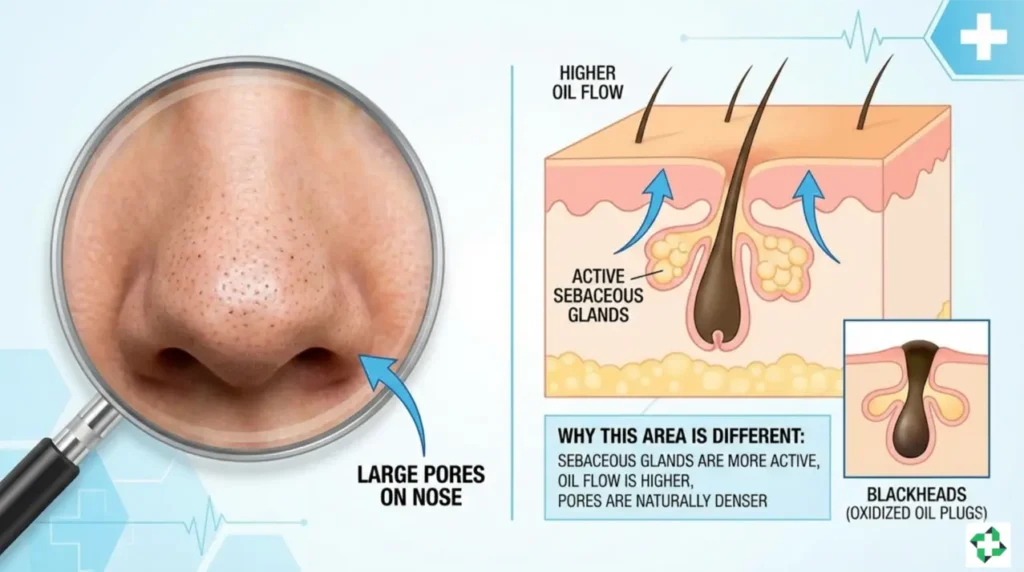
This explains why large pores on nose and blackheads around nose often appear together. Blackheads are oxidized oil plugs that sit inside pores, making them look darker and larger.
Can You Really Shrink Pores on Face?
A realistic answer matters.
You cannot permanently change the size of your pores. However, you can make them appear smaller by:
- Keeping pores clean
- Improving skin elasticity
- Reducing oil buildup
- Supporting overall skin health
So when people search how to shrink pores on face, what they are truly seeking is how to reduce the appearance of pores, and that is absolutely achievable.
Daily Skincare Habits That Help Minimize Pores on Face
Consistency matters more than intensity. The following habits play a foundational role.
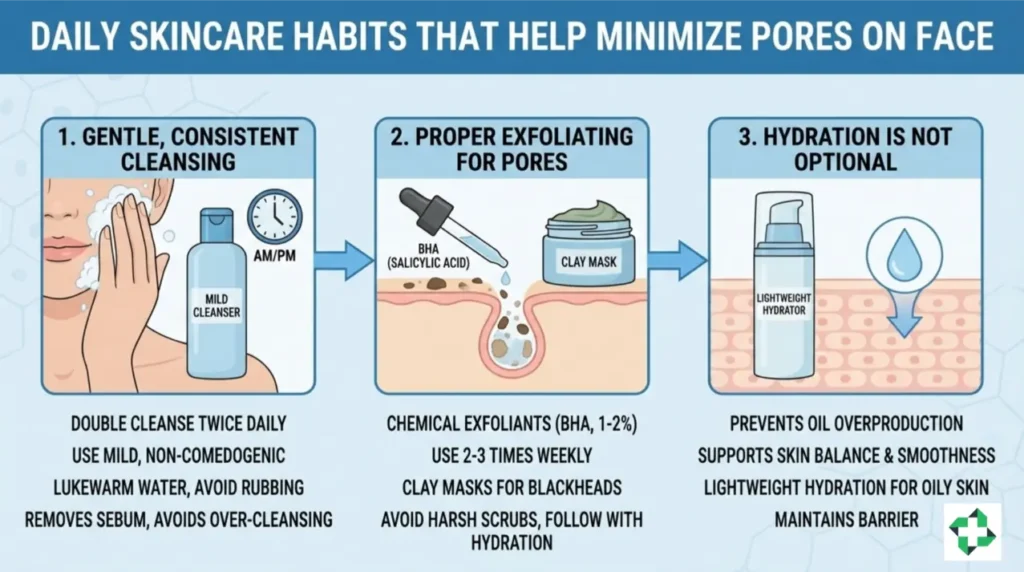
1. Gentle, Consistent Cleansing
Incorporating consistent habits can play a role in how to shrink pores on face by addressing oil buildup and skin health. Start with gentle cleansing twice daily using a mild, non-comedogenic cleanser to remove excess sebum and debris without stripping the skin. Over-cleansing can trigger more oil production, worsening clogged pores on face.
- Cleanse twice daily ( Double Cleansing )
- Use lukewarm water
- Avoid aggressive rubbing
2. Proper Exfoliating for Pores
Exfoliating for pores involves removing dead skin cells that can clog openings, potentially aiding in how to shrink pores on face. Chemical exfoliants like salicylic acid (BHA) penetrate pores to dissolve oil and debris, suitable for oily skin types. Use 1-2% concentrations 2-3 times weekly to avoid irritation.
Physical exfoliation with soft tools can smooth texture, but overdoing it may inflame pores. For blackheads around nose, gentle methods like clay masks may draw out impurities without harsh scrubbing. Always follow with hydration to support the barrier.
Key principles:
- Exfoliate 1–2 times per week
- Avoid over-exfoliation
- Focus on gentle chemical exfoliation rather than harsh physical scrubs
3. Hydration Is Not Optional
Dehydrated skin can overproduce oil to compensate, making pores look larger. Lightweight hydration supports skin balance and smoothness—even for oily skin types.Hydration from within—drinking adequate water—and using lightweight moisturizers help maintain balance, as dehydrated skin can make pores appear larger.
Open Pores on Face and the Role of Oil Balance
One of the most misunderstood concepts is oil control. Stripping skin of oil does not shrink pores—it often makes them worse.
Balanced skin:
- Produces oil steadily
- Has better barrier function
- Shows smoother pore appearance
This balance is key to managing open pores on face reason effectively.
Also Visit:
Hydration and Moisture: Do You Need Both? [2026]Blackheads Around Nose and Dark Pores
Dark or noticeable pores are often mistaken for dirt, but they are usually blackheads or sebaceous filaments.
What Causes Dark Pores?
- Oxidized oil inside the pore
- Debris buildup
- Environmental pollution
Managing blackheads around nose requires regular cleansing and exfoliation, not aggressive extraction or squeezing, which can permanently stretch pores.
Ingredients That May Help with Large Pores on Nose
Certain ingredients target large pores on nose, a common concern due to oil accumulation. Niacinamide (vitamin B3) at 2-5% may regulate sebum and improve texture. Retinoids promote cell turnover, potentially refining pores over time, but start low to build tolerance.
Hyaluronic acid hydrates without clogging, supporting how to minimize pores on face by plumping skin. For dark pores, gentle brighteners like vitamin C may even tone, though consistency is key.
Lifestyle Factors That Affect Pores on Face
Skincare alone is not the full picture.
1. Diet and Hydration
While food does not directly “cause” pores, overall skin health is influenced by:
- Adequate hydration
- Balanced nutrition
- Reduced ultra-processed foods
2. Sleep and Stress
Chronic stress affects hormones that regulate oil production. Poor sleep quality also impacts skin repair processes, influencing texture and pore visibility.
3. Sun Protection
Daily sun protection helps preserve collagen, which supports pore structure. Over time, this plays a significant role in how to minimize pores on face.
Common Myths About Shrinking Pores on Face
Myth 1: Ice Can Close Pores Permanently
Cold can temporarily reduce redness and oil, but pores do not physically close.
Myth 2: Scrubbing Harder Makes Pores Smaller
Harsh scrubbing damages the skin barrier and can worsen pore appearance.
Myth 3: You Can Eliminate Pores Completely
Pores are essential for healthy skin function. The goal is refinement, not elimination.
Building a Pore-Friendly Skincare Routine
A simple, balanced routine often works better than a complicated one.
Morning
- Gentle cleanser
- Lightweight hydration
- Sun protection
Evening
- Cleanser
- Occasional exfoliation
- Barrier-supportive hydration
This consistency supports smoother texture and reduces the appearance of big pores on face over time.
How Long Does It Take to See Improvement?
Improving the appearance of pores is gradual. Most people notice changes in:
- 2–4 weeks: smoother texture
- 6–8 weeks: reduced congestion
- 8–12 weeks: visible refinement
Results depend on skin type, consistency, and lifestyle factors.
When to Be Extra Cautious
If you experience:
- Persistent irritation
- Sudden acne flare-ups
- Inflammation or sensitivity
It’s important to pause and reassess your routine rather than pushing through discomfort. Skin health always comes before aesthetics.
Final Thoughts: How to Shrink Pores on Face the Right Way
Understanding how to shrink pores on face starts with setting realistic expectations. Pores are a natural part of healthy skin, but their appearance can be improved with consistent care, gentle exfoliation, proper hydration, and sun protection.
At healthpedia24.com, we emphasize long-term skin health over quick fixes. Smooth skin is not about perfection—it’s about balance, patience, and informed care.When you focus on supporting your skin’s natural processes rather than fighting them, visible pores gradually become less of a concern and more of a normal, manageable feature of healthy skin.
Sources : National Institutes of Health ( What Causes Enlarged Pores on Face? ), Rapaport Dermatology of Beverly Hills ( Why Do Pores Look Bigger? ), Healthline ( Large Pores on Nose ), Cleveland Clinic ( Skincare Habits for Minimize Pores on Face OR how to shrink Pores ), Cleveland Clinic ( Blackheads or Dark Pores causes ).
Disclaimer
The content provided in this article, “How to Shrink Pores on Face: A Complete Science-Backed Guide for Smoother Skin [2026],” by HealthPedia24.com is for general informational and educational purposes only and is NOT a substitute for professional medical advice, diagnosis, or treatment. Skin rashes and chronic redness can be symptoms of various underlying conditions, including infections or autoimmune diseases. Always consult a qualified dermatologist or healthcare professional with any questions regarding a medical condition. If you experience severe swelling or an allergic reaction, seek emergency medical attention immediately. HealthPedia24.com is not responsible for any individual adverse reactions resulting from the use of the information provided herein.
For more Information you can read our Privacy Policy and Terms & Conditions.
Frequently Asked Questions
How to Shrink Pores on Face effectively in 2026?
While you cannot physically change your pore size, you can make them look virtually invisible. Use Salicylic Acid (BHA) to clear deep-seated oil and Niacinamide to refine skin texture. Consistent exfoliation prevents pores from stretching and appearing larger.
How do I close my open pores naturally?
Pores do not have muscles to open or close. However, you can tighten their appearance naturally using Clay Masks to absorb excess oil and Cold Water rinses. Natural astringents like Green Tea or Witch Hazel also help temporarily firm the skin surface.
What causes big pores on face?
Four primary factors contribute to enlarged pores:
Excess Sebum: Overactive oil glands stretch the pore walls.
Aging: Loss of collagen and elastin makes skin less firm.
Genetics: Your natural skin type and pore density.
Sun Damage: UV rays break down the skin’s support structure, causing pores to sag.
How can I reduce pore size on my face permanently?
For long-term results, use Retinoids to increase cell turnover and daily Sunscreen to prevent collagen loss. Professional treatments like Microneedling or Chemical Peels offer the most permanent improvements by rebuilding the skin’s internal structure.
Can enlarged pores go away?
No, pores are a functional part of your skin and cannot be removed. However, with a proper exfoliation and hydration routine, you can clear the debris that makes them stand out, making your skin look smooth and poreless.