Hey there, skincare adventurer!
Let’s be honest: Have you ever felt like you’re throwing money into a black hole of trendy serums and creams? You bought that viral moisturizer, and instead of giving you a glow, it just clogged your pores or left your face feeling tight.
We get it. The confusion is real! But here’s the secret: that product failure isn’t your fault—it’s simply because that product wasn’t made for your skin’s unique genetic blueprint. You can’t build a perfect house without a solid foundation, and the same goes for your routine.
Here at HealthPedia24, our mission is to cut through the confusion and get straight to the facts. That foundation starts right now, with this ultimate guide: Identify Your True Skin Type – Fast & Easy Test [2025].
We’re going to ditch the guesswork and walk you through the simple, dermatologist-approved test you can do at home. By the end of this guide, you will finally understand what your skin truly needs. Ready to stop guessing and start glowing? Let’s dive in!
The 5 Basic Skin Types
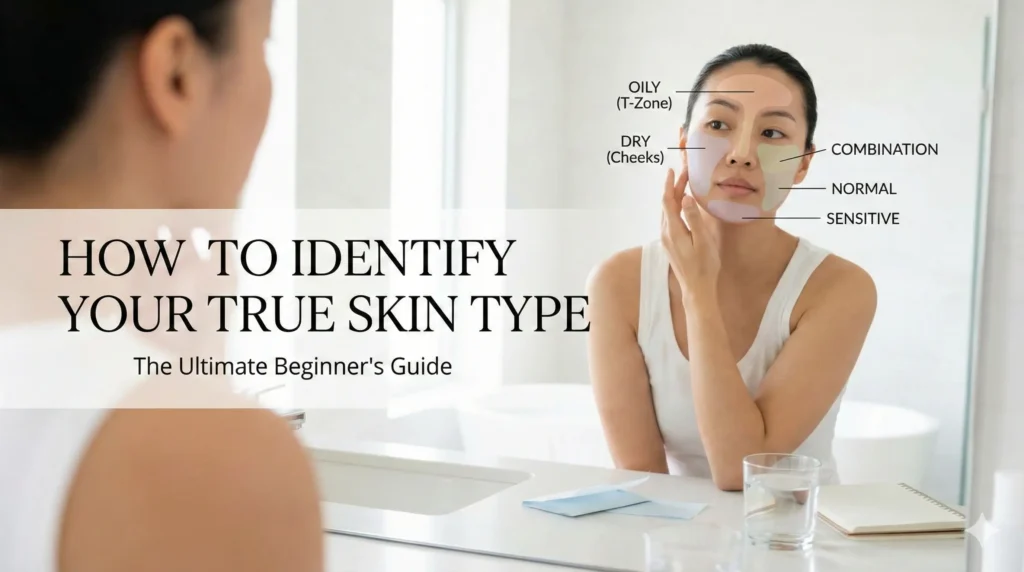
Generally, skin is categorized into five main types based on how much sebum (oil) your skin naturally produces.
1. Normal Skin
This is the “balanced” skin type. It is neither too oily nor too dry.
- Characteristics: Small, barely visible pores; smooth texture; no severe sensitivity.
- How it feels: Comfortable and hydrated throughout the day.
2. Dry Skin
Dry skin produces less sebum than “normal” skin. Because it lacks protective oils, it struggles to retain moisture and build a strong barrier against external elements.
- Characteristics: Rough or flaky patches; dull complexion; almost invisible pores.
- How it feels: Tight, especially after washing the face. Fine lines may appear more pronounced.
3. Oily Skin
This skin type produces an excess of sebum. While it can be prone to acne, the advantage is that oily skin naturally stays moisturized and often ages slower (fewer wrinkles).
- Characteristics: Enlarged, visible pores; glossy shine; prone to blackheads and blemishes.
- How it feels: Greasy or slick to the touch, often needing blotting by midday.
4. Combination Skin
This is one of the most common skin types. It features a mix of two different skin types on different areas of the face.
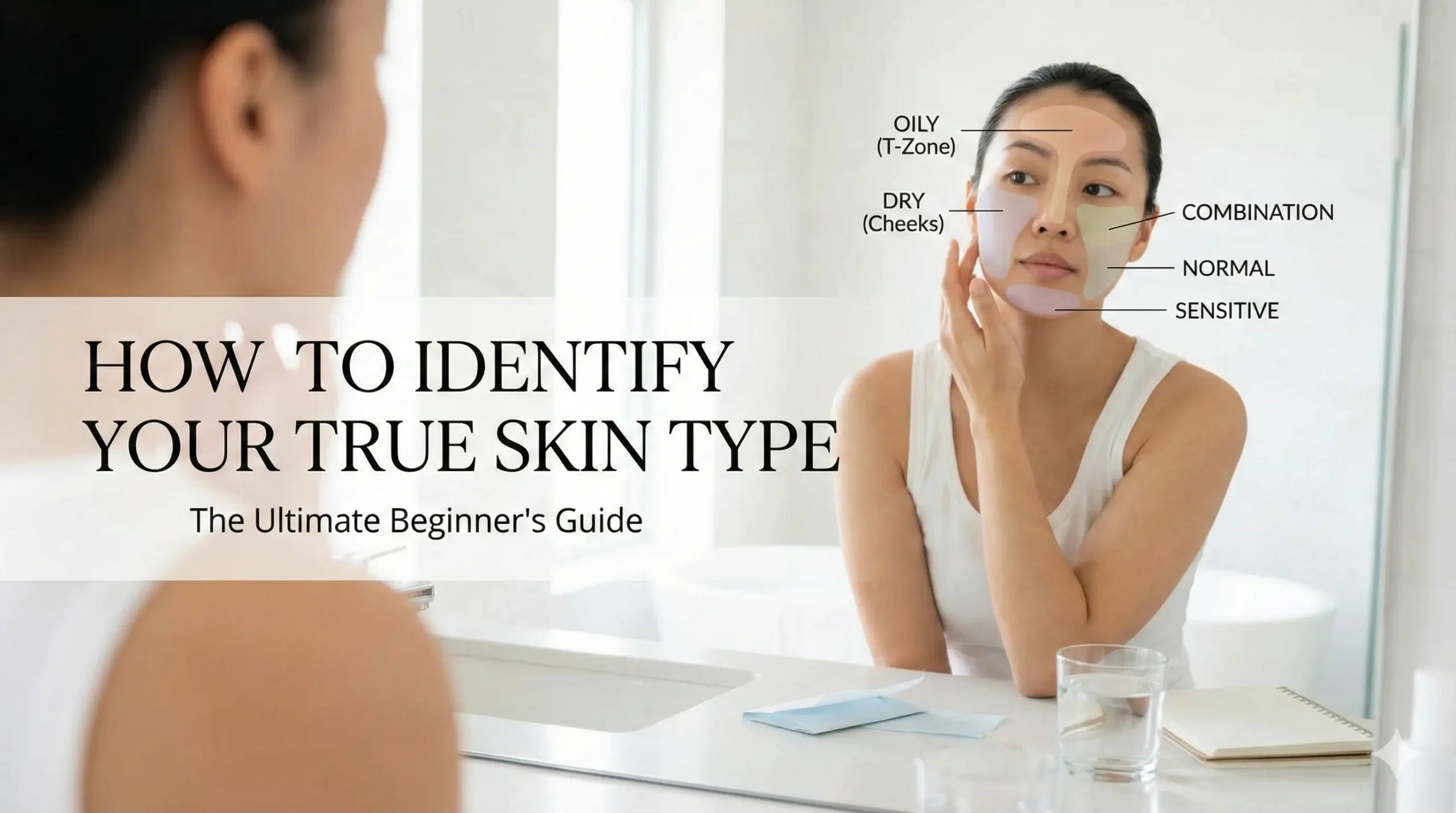
- Characteristics: Usually oily in the “T-Zone” (forehead, nose, and chin) and dry or normal on the cheeks and jawline.
- How it feels: You might feel greasy on your forehead but experience tightness on your cheeks simultaneously.
5. Sensitive Skin
Sensitive skin is more of a characteristic than a sebum-based type, but it requires specific care. It has a weakened barrier that reacts easily to stressors.
- Characteristics: Redness, itching, burning, or dryness.
- Triggers: Fragrance, dyes, environmental factors (heat/cold), and harsh chemicals.
In Short –
| Skin Type | Key Characteristics | Common Issues/Feel |
| 1. Normal | Balanced, clear, minimal imperfections. | Rare sensitivity; smooth texture. |
| 2. Dry | Tight, flaky, rough patches, dull appearance. | Lack of oil (sebum); fine lines are more visible. |
| 3. Oily | Shiny, greasy, visible pores, prone to breakouts. | Excess sebum production, often shiny by midday. |
| 4. Combined (Combination) | Oily in the T-zone (forehead, nose, chin) and dry/normal on the cheeks. | Requires two different types of care/products. |
| 5. Sensitive | Reacts easily to products, redness, itching, burning. | Requires gentle, fragrance-free ingredients. |
Method 1: The Bare-Faced Method (The Gold Standard)
The most accurate way to determine your skin type is to observe how it behaves without any products interfering. Follow these steps:
Step 1: Cleanse Wash your face thoroughly with a mild, gentle cleanser. Do not use an exfoliating scrub or an acne wash, as these can skew the results. Pat your face dry gently.
Step 2: The Wait This is the most critical step. Wait for 30 to 60 minutes. Do not apply any toner, serum, or moisturizer. Leave your skin completely bare.
Step 3: The Observation After the time is up, go to a mirror with good natural lighting and observe:
- If your face feels tight when you smile or make facial expressions, and you see flaky patches: You have Dry Skin.
- If there is a noticeable shine on your nose and forehead, but your cheeks feel dry or tight: You have Combination Skin.
- If your face looks shiny all over (cheeks, forehead, chin) and feels slick: You have Oily Skin.
- If your skin feels comfortable, isn’t shiny, and isn’t tight: You have Normal Skin.
- If your skin feels itchy or looks red and inflamed after just washing: You likely have Sensitive Skin.
Step 4: Determine Based on the observations after 30-60 minutes, categorize the skin type.
Method 2: The Blotting Sheet Method
If you are still unsure after the Bare-Faced test, the Blotting Sheet method is a quick way to verify your results by physically checking for oil levels.
How to do it:
- Take a clean sheet of blotting paper.
- Gently press it against different areas of your face: your forehead, nose, chin, and cheeks.
- Hold the sheet up to the light to see how much oil was absorbed.
The Results:
- Little to no oil: You have Dry Skin.
- Oil from forehead and nose only: You have Combination Skin.
- Paper is saturated with oil: You have Oily Skin.
- Minimal oil from T-zone only: You likely have Normal Skin.
Differentiating Between Skin Type vs. Skin Condition
Before you build your routine, it is vital to understand the difference between your genetic Skin Type and a temporary Skin Condition.
- Skin Type (Oily, Dry, Normal) is genetic. You are born with it.
- Skin Condition (Dehydration, Acne, Aging) is temporary and can be treated.
The Most Common Mistake: Dehydrated vs. Dry Many people confuse “Dry Skin” with “Dehydrated Skin.”
- Dry Skin lacks oil (Lipids).
- Dehydrated Skin lacks water.
Pro Tip: Even Oily skin can be dehydrated! If your skin feels incredibly oily on the surface but feels tight and uncomfortable underneath, you likely have Dehydrated Oily Skin. In this case, you need water-based hydration, not heavy oils.
Identifying your skin type is not a one-time task. Your skin can change with the seasons, your age, and your environment. However, using the Bare-Faced method gives you the blueprint you need to start.
Now that you know your true skin type, you can stop wasting money on the wrong products and start building a routine that actually works for you.
Sources ; American Academy of Dermatology(Defines general skin health, common conditions, and care routines.), National Institutes of Health ( About Skin Physiology )
Disclaimer
Please Note:
The content provided in this article, (“Identify Your True Skin Type – Fast & Easy Test [2025]”), is for informational and educational purposes only. It is not intended to be a substitute for professional medical advice, diagnosis, or treatment.
Always seek the advice of a board-certified dermatologist or other qualified healthcare provider if you have any questions regarding a medical condition, severe skin issues (like persistent acne, rosacea, or eczema), or before starting any new skin treatment or regimen.
Reliance on any information provided by this website is solely at your own risk.
For more information you can read our Privacy Policy and Terms & Conditions.
Frequently Asked Questions (FAQs)
What is the easiest way to find out my skin type?
The fastest and most reliable method is the Bare-Face Test. Cleanse your face, wait 30–60 minutes without applying any products, and then observe if your skin is tight, shiny, or a mix. This quick observation helps you determine your true skin profile.
How is a combination skin type different from a normal skin type?
A normal skin type is perfectly balanced, with small pores and minimal shine. A combination skin type is characterized by oiliness primarily in the T-Zone (forehead, nose, chin) and normal or dry areas on the cheeks and jawline.
How long does a proper skin type test take?
The most accurate method, the Bare-Face Test, requires you to wait for at least 30 minutes (up to 60 minutes) after washing your face. This waiting period is crucial to allow your skin’s natural sebum levels to settle before you make an observation.
Can a dry skin type become oily?
No, your dry skin type (lacking oil) is genetic and permanent. However, it can become dehydrated (lacking water). When skin is dehydrated, it may overcompensate by producing excess surface oil, which can be easily confused with an oily skin type.