
Welcome to HealthPedia24.com, where we help you understand the language of your body.
We have all been there. You have a massive deadline coming up, a family emergency, or just a week where everything seems to go wrong. Suddenly, you look in the mirror and see red, itchy bumps appearing out of nowhere. You haven’t changed your laundry detergent, and you haven’t eaten anything weird. So, what gives?
It turns out, your skin and your brain are constantly talking to each other. When your mind is under pressure, your skin often pays the price. This phenomenon is known as a stress and skin rash, and it is surprisingly common.
In this guide, we are going to dive deep into the science of why stress shows up on your face and body, how to distinguish a skin rash from stress from an allergic reaction, and practical ways to calm both your mind and your skin.
The Science: Why Does Stress Cause Rashes?
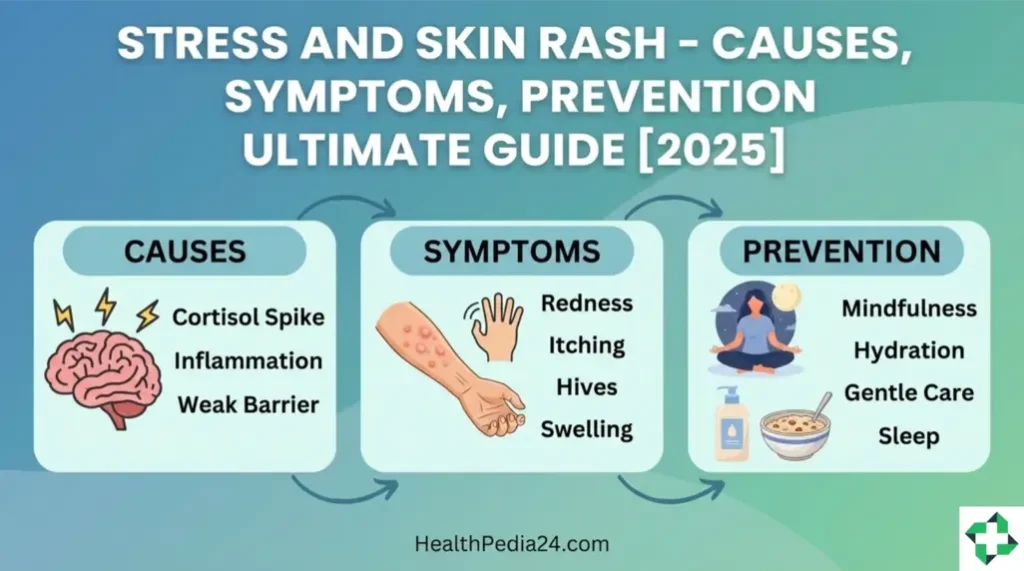
To understand why a stress and skin rash flare-up occurs, we have to look at how the body handles pressure. When you are anxious or overwhelmed, your body initiates the “fight or flight” response. This triggers a surge of hormones, primarily cortisol and adrenaline.
While these hormones are helpful if you are running from a tiger, they are problematic when they stay elevated due to chronic stress.
1. The Cortisol Effect
Cortisol is known as the stress hormone. When cortisol levels spike, it suppresses the immune system in some ways but sends it into overdrive in others. It causes the body to produce more oil (sebum) and increases inflammation throughout the body. This systemic inflammation can cause the skin to react defensively, leading to a stress and skin rash.
2. Histamine Release
Perhaps the most direct link to rashes is the chemical histamine. Stress signals your immune system to release histamine—the same chemical released during an allergic reaction. Histamine causes your blood vessels to dilate (redness) and fluid to leak into the skin layers (swelling/bumps). This is why a skin rash from stress often looks exactly like an allergic reaction to food or pollen.
3. Compromised Skin Barrier
Chronic stress weakens the skin’s lipid barrier. This barrier is responsible for keeping moisture in and irritants out. When it is weak, your skin becomes dry, sensitive, and more prone to irritation, making the appearance of a stress and skin rash much more likely.
Identifying a Stress Rash: What Does It Look Like?
Because skin reacts differently for everyone, a stress and skin rash can present in various forms. However, the most common manifestation is stress hives (medically known as urticaria).
Signs of Stress Hives
If you suspect you are dealing with a skin rash from stress, look for these characteristics:
- Appearance: Raised, puffy bumps or welts (wheals). They can be tiny dots or large blotches that connect to form a map-like pattern.
- Color: They are typically pink or red on lighter skin tones. On darker skin tones, they may be the same color as the skin or slightly darker/purple, but the raised texture is the key identifier.
- Sensation: The itch is usually intense. Some people also report a burning or stinging sensation.
- Location: While they can appear anywhere, stress and skin rash symptoms often show up on the face, neck, chest, and arms.
- Movement: One unique feature of hives is that they can be “migratory.” A welt might disappear from your arm and reappear on your stomach hours later.
- Timing: They often appear suddenly during a period of high anxiety and can disappear just as quickly (within 24 hours) or linger for days.
Specific Skin Conditions Triggered by Stress
Stress doesn’t just create new rashes; it loves to wake up old sleeping giants. If you have a pre-existing skin condition, stress acts like gasoline on a fire.
1. Stress Hives (Acute Urticaria)
This is the classic stress and skin rash. It is temporary but annoying. The welts can migrate, meaning they fade from one arm and appear on the other leg hours later.
2. Eczema (Atopic Dermatitis)
People with eczema have a compromised skin barrier. Stress dries out the skin further and increases inflammation. A skin rash from stress in an eczema patient usually looks like dry, scaly, intensely itchy patches, often inside the elbows or behind the knees.
3. Psoriasis
Psoriasis is an autoimmune disease. Stress is one of the biggest triggers for psoriasis flare-ups. The release of cortisol increases inflammation, causing the skin cells to multiply too fast, leading to thick, silvery scales.
4. Rosacea
If you flush when you are embarrassed, you know the link between emotions and blood vessels. Stress causes blood vessels to dilate (widen), leading to the severe redness and “heat” associated with rosacea.
5. Acne
While not a “rash” in the traditional sense, stress acne is a major concern. The spike in cortisol increases oil production, which clogs pores. Stress acne typically appears as painful cysts along the jawline and chin.
How to Treat a Stress Rash
Okay, so you have identified that you have a stress and skin rash. How do you get rid of it? The approach is two-fold: treat the skin and treat the mind.
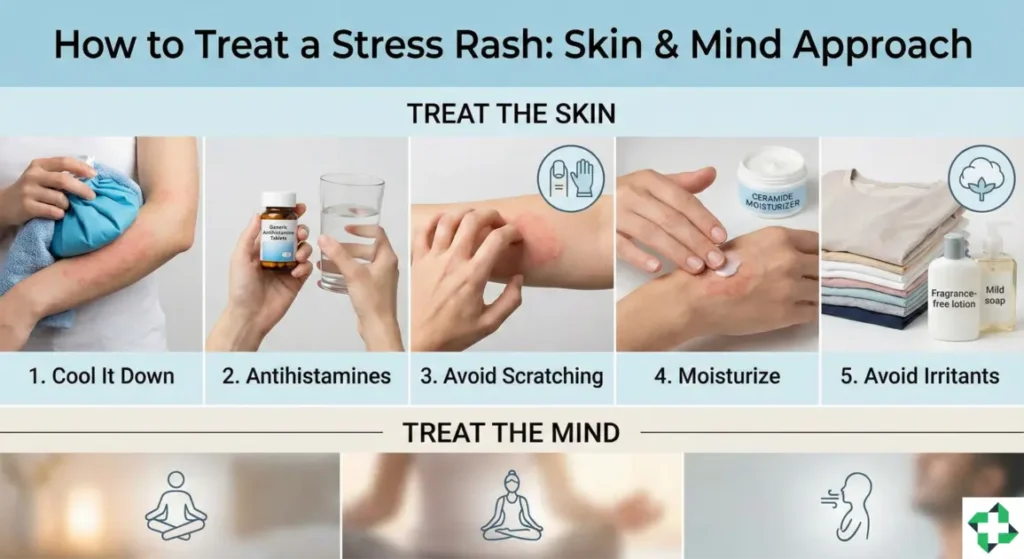
Here are non-prescription ways to calm the flare-up immediately:
1. Cool It Down
Heat makes a stress and skin rash worse because it increases blood flow and histamine activity.
- What to do: Apply a cold compress or an ice pack wrapped in a towel to the affected area for 10–15 minutes. This constricts the blood vessels and numbs the itch.
2. Antihistamines
Since the rash is fueled by histamine, an over-the-counter oral antihistamine (like Benadryl, Zyrtec, or Allegra) can block the chemical signals. This is often the fastest way to flatten the hives associated with a stress and skin rash. Note: Always check with a pharmacist before taking new medication.
3. Avoid Scratching
This is hard, but scratching releases more histamine, creating a vicious cycle called the “itch-scratch cycle.” Keep your nails short or wear gloves at night if you scratch in your sleep.
4. Moisturize with Ceramides
Stress weakens your skin barrier. Using a fragrance-free moisturizer rich in ceramides or colloidal oatmeal can help repair the barrier and soothe the skin rash from stress.
5. Avoid Irritants
When you have a stress and skin rash, your skin barrier is broken. Do not use scented lotions, harsh soaps, or exfoliants. Wear loose-fitting, cotton clothing to prevent friction.
Long-Term Prevention: Managing Stress for Better Skin
You can treat the symptoms with cream, but to truly prevent a stress and skin rash from returning, you must address the root cause: the stress itself.
Practice “Skin Mindfulness”
When we are stressed, we often neglect our hygiene or pick at our skin.
- Rule: Stop “stress picking.” If you have acne or a rash, touching it introduces bacteria.
- Routine: Stick to your skincare routine. The act of gently washing your face can be a calming ritual that tells your brain, “The day is over, we are safe now.”
Lower Cortisol Naturally
To prevent the next stress and skin rash, you need to lower your cortisol levels.
- Sleep: Lack of sleep spikes cortisol. Aim for 7–8 hours.
- Exercise: Physical activity burns off the excess adrenaline that builds up during stress.
- Breathwork: Deep breathing (like the 4-7-8 method) activates the parasympathetic nervous system, telling your body to stop the inflammatory response.
When to See a Doctor
Usually, a stress and skin rash is harmless and goes away on its own within a few days. However, sometimes it signals a deeper issue.
Consult a doctor if:
- The rash covers your entire body.
- You have a fever or feel ill.
- The rash becomes painful or starts blistering.
- The stress and skin rash persists for more than 6 weeks (this is considered chronic urticaria).
- Emergency Warning: If your rash is accompanied by swelling of the lips, tongue, or throat, or if you have difficulty breathing, call emergency services immediately. This could be anaphylaxis, a life-threatening allergic reaction.
Expert Tips for Sensitive Skin
If you know you are prone to a skin rash from stress, preparation is key.
- Keep a Skin Diary: Note when your rashes appear. Was it after a fight with a partner? Before a presentation? identifying the emotional trigger helps you manage it before the rash appears.
- Hydrate: Dehydrated skin is more reactive. Drink plenty of water to keep your internal environment balanced.
- Oatmeal Baths: Colloidal oatmeal is a powerful skin soother. Soaking in a lukewarm oatmeal bath can calm the entire nervous system and the skin simultaneously.
Also Visit:
Hydration and Moisture: Do You Need Both? [2025]Conclusion
Dealing with a stress and skin rash can feel like a cruel joke—you are already stressed, and now you have to deal with itchy, irritated skin, which only makes you more stressed. It is a cycle, but it is one you can break.
By recognizing the signs early and treating your skin with gentle care, you can manage the symptoms effectively. More importantly, viewing your stress and skin rash as a warning signal from your body can encourage you to slow down and prioritize your mental health.
Remember, clear skin starts with a calm mind. For more insights into the connection between your health and your lifestyle, keep exploring HealthPedia24.com.
Sources : Healthline ( Can Antihistamines Treat Stress-Induced Rashes? ), Cleveland Clinic ( Colloidal Oatmeal: What Is It and What Are Its Benefits? ), Healthline ( Identifying and Treating Stress Rash or Hives ), Mayo Clinic ( Chronic Hives or Stress Hives ).
Important Disclaimer
The content provided in this article, “Stress and Skin Rash: Understanding the Mind-Skin Connection,” by HealthPedia24.com is for general informational and educational purposes only and is NOT a substitute for professional medical advice, diagnosis, or treatment.
Skin rashes can be symptoms of various underlying conditions, including infections, autoimmune diseases, or severe allergic reactions. Always consult a qualified dermatologist or healthcare professional with any questions regarding a medical condition. If you experience difficulty breathing or swelling of the throat, seek emergency medical attention immediately. HealthPedia24.com is not responsible for any individual adverse reactions resulting from the use of the information provided herein.
For more Information you can read our Privacy Policy and Terms & Conditions.
What are the symptoms of stress on the skin?
Symptoms vary but often include hives (red, raised bumps), increased acne breakouts due to oil production, flare-ups of eczema or psoriasis, and a general look of dullness or dehydration. Intense itching without a bug bite is a classic sign of a stress and skin rash.
Can high cortisol cause skin rashes?
Yes. High cortisol suppresses the immune system and increases inflammation. This makes the skin more reactive. It also triggers the release of histamine, which directly causes the redness and itching associated with a stress and skin rash.
How to get rid of stress rashes?
The fastest relief comes from cooling the skin with an ice pack and taking an over-the-counter antihistamine to block the itching signal. Long-term, you must lower your stress levels through sleep, hydration, and relaxation techniques to stop the rash from returning.
How do you know if your rash is from stress?
If the rash appears suddenly during a time of high anxiety, moves around the body (like hives often do), and you haven’t introduced any new foods, detergents, or skincare products, it is likely a skin rash from stress.
Which skin condition is triggered by stress?
Almost all skin conditions are worsened by stress, but the most common ones are Urticaria (Hives), Eczema (Atopic Dermatitis), Psoriasis, Rosacea, and Acne.